Showing posts with label radicchio. Show all posts

Sunday, July 8, 2007

Edible Perennial in the bed.

My perennial garden in the front is undergoing an overhaul. (Yes, I know I just put it in last year but I am a gardener right and gardeners are infamous for reorganizing, aren't they?).

One of my decisions is to keep the front more of a perennial, self seeding garden, as opposed to the potager it is now. In other words, to have fewer annual vegetables. That doesn't mean it won't have veggies. Oh no. It will just have more biennual or perennial vegetables. I have salsify growing, which will have a lovely purple flower in its second year, and will be replanting parnip roots for their dramatic flower. I will also be transferring my 'radicchio' chicory with its arresting blue flower to the front.

These will join all sorts of nibble plants such as:

Seen grown here with overwintered hot peppers, nasturtiums, sage and thyme.
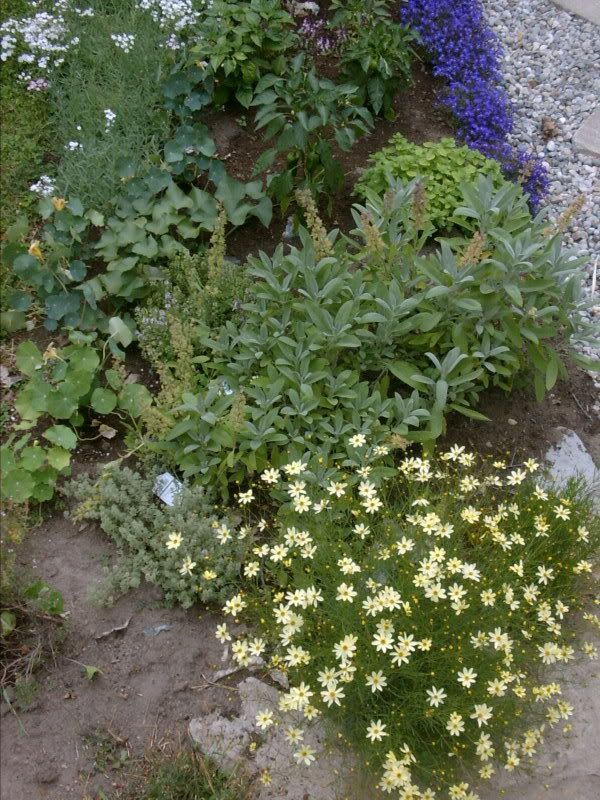
Photo Sharing and Video Hosting at Photobucket
Also showing moonbeam coreopsis, a cultivar of a NA wildflower, gypsophilia repens - great for dry areas, basil, and lobelia.

Jeruselum artichokes, horseradish, rhubarb, daylilies and egpytian onions in my 'wild side bed'
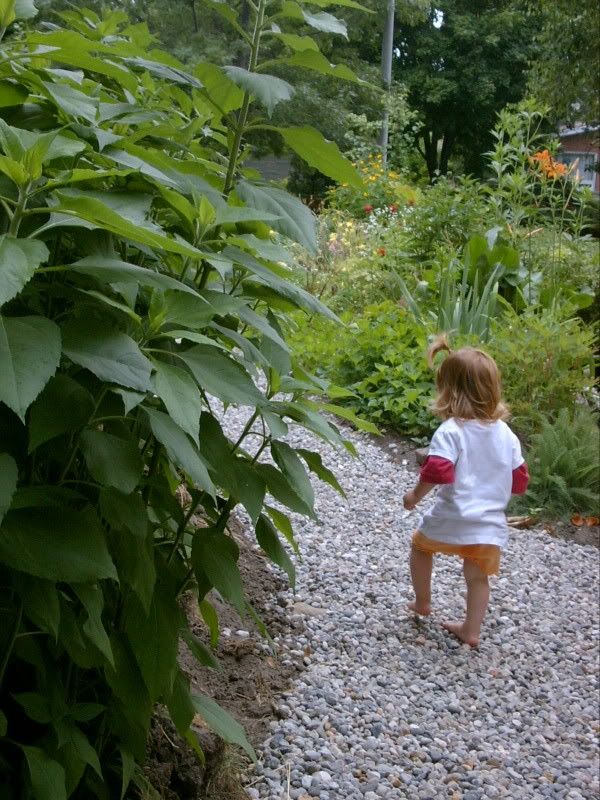
Photo Sharing and Video Hosting at Photobucket
The giant plant is Jeruselum Artichoke.
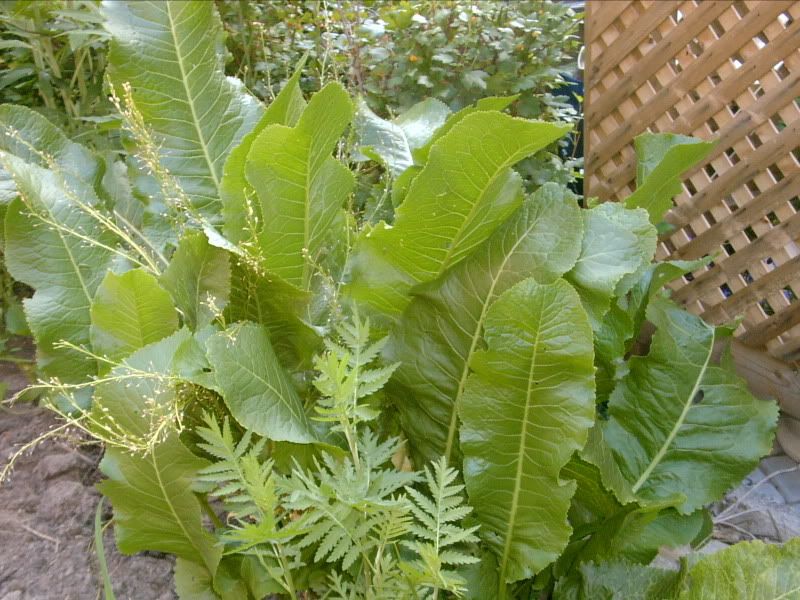
Photo Sharing and Video Hosting at Photobucket

I adore the dramatic leaves of horseradish. Here seen with tansy that somehow snuck in.


Aples, plums, red current, gooseberry and rugosa rose as part of the foundation planting:
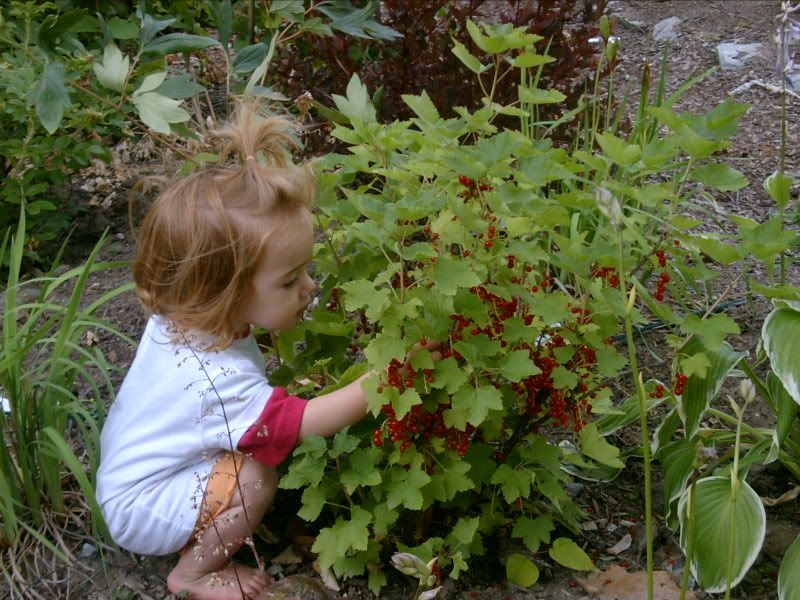
Photo Sharing and Video Hosting at Photobucket
Seen her with native ninebark, hosta, iris and peony. Oh and a kid, nicknamed worse than the birds. This is where she was headed in the above picture.

I will, however, miss the strange looks of people passing by the cabbage planted with the lavender.
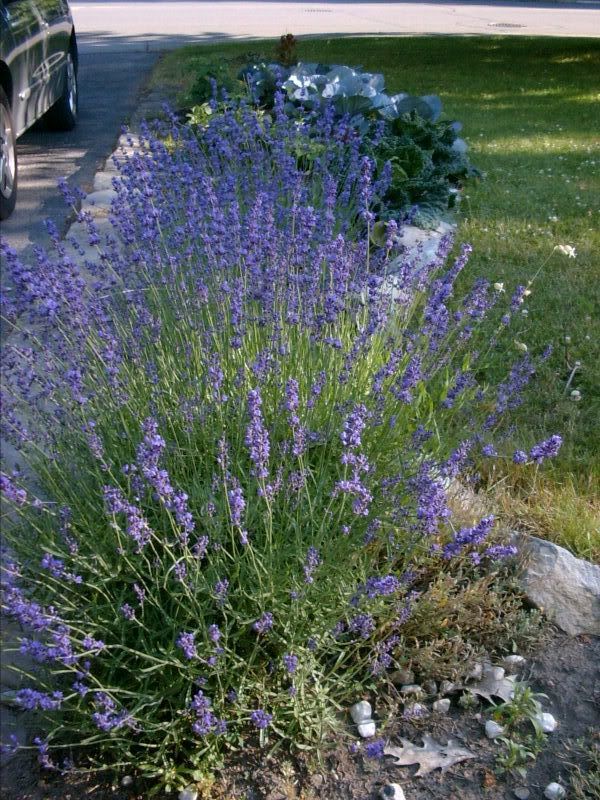
Photo Sharing and Video Hosting at Photobucket
Cabbage temporarily planted where there are some so far well behaved raspberry vines...

I should probably include an


Optimistic Gardener Warning

I am planting the salsify beside a false sunflower. And the parsnip as a background plant. The chicory will probably grow in front of the parsnip, with the cosmos. As chicory is my favourite flower, I was happy to discover that radicchio has a flower nearly identical to the wild type, except the buds have a pleasing jewel tone before opening.

Photo updates next year.

Links:

A wild food site. How to identify and prepare chicory

Salsify flower - aren't they pretty!

Saturday, February 3, 2007

Radicchio is perrenial - take two

Late last night, I was overcome by the desire to again tackle the untangling of chicory names in order to determine just which ones exactly are perrenial. Well, I think I may have cracked it (feel free to disagree). In fact, I feel so confident, I am going to write it as a fact.

Hortiphilia Fact:

For gardeners the chicory family is broken into two sections
Endives which are annual/biennual &
Chicories, which includes radicchio which are perrenial


Your really that sure? It turns out that I needed to look into the latin. To repeat the above in scientific sounding terms: The chicory relatives that we commonly consume in our salads are broken into two names:


  1. Cichorium endivia - endive, escarole types
  2. Cichorium intybus - radicchio, sugarloaf, root chicory and forcing chicory otherwise known as belgian endive/witoof, cutting chicory, italian dandelion, asparagus chicory, others known as 'chicory'

So if you want to try and make a perrenial bed of chicories, then you would choose from the second category. I have yet to research how well the 'endivia' group self-seeds.


By the way, I did read on a seed company webpage that they suggest reseeding radicchio every year for better quality (or more sales?). We shall see.

Once again, stay tuned to see how my chicory bed turns out...


Go to Radicchio is Perrenial? - take one


Links (only the most succinct of the webpages I was dredging...)

http://www.floridata.com/ref/c/cich_end.cfm

http://www.floridata.com/ref/C/cich_int.cfm


Tuesday, January 30, 2007

Radicchio is a perrenial?

Yet another vegetable that requires its own little patch. To plant only occasionally is to make time for more tending (read weeding) of the other plants... oh and to spend more time smelling (or eating) the flowers.
Anyhow, it turns out that chicories, such as radicchio, are perrenial.

Or at least so I have been led to believe by this post on garden web . So I hit google and started searching. The evidence was mounting. The living herbs catalogue has red trevisso radicchio listed as a annual/perrenial. Not sure why the either or but hey, I continued to look. Yet another site makes a distinction in chicories by stating that radicchio is perrenial. It also says that chicories are annual and while this seems to be true of endive, I think a lot of sorting out needs to be done when it comes to the names of these things. Certainly common chicory whose pretty blue flowers cover waste sites and ditches are perrenial.

The site that convinced me was Floridata which stated that radicchio and chicory are hardy perrenials from zones 4-9 (American zones). I fit into that catagory and with a little help from mulch and perhaps some sort of cold frame rigged up, I think that they should survive the winter. We'll have to give it a try.

By the way, there are a dizzying number of chicory varities which I am trying to sort out, this is what I know:
  1. red / cream heading: radicchio
  2. green heading: sugarloaf
  3. long leaf : italian dandelion, sword chicory, Puntarelle, Catalogna
  4. thick stemmed: asparagus chicory
  5. round leaf, cutting chicory: small leafed varities for salad greens
  6. forcing: belgian endive, french endive, witloof
  7. loose heads: curly endive, escarole, batavian endive, commonly blanched, frisee
  8. root: common chicory whose root is used as a coffe substitute or additive

Did that straighten it out for you? No, I'm not surprised. Stay tuned for more as I untangle the story on chicory.


By the way, why you ask am I so interested in this salad ammendment? It is a cold tolerant plant which can overwinter if wrapped up in a cold frame or polytunnel, or both, depending on what climate you live in. Hey, it might just live outside if you are lucky enough to have mild winters. Cold tolerance is pretty exciting but add perrenial and I want to know more.

Part two

Links:


http://www.gourmetseed.com/Catalogna_chicory_seed.0.html
http://www.seedsofitaly.com/catalogue/6
http://extension.usu.edu/files/publications/publication/HG_Garaden_2005-15.pdf
http://www.theitaliangardener.com.au/category8_1.htm
http://www.plantnames.unimelb.edu.au/Sorting/Chicory_Gallery.html
http://edis.ifas.ufl.edu/MV047