Showing posts with label 201. Show all posts

Thursday, November 1, 2007

A frosty end
solanums versus brassicas

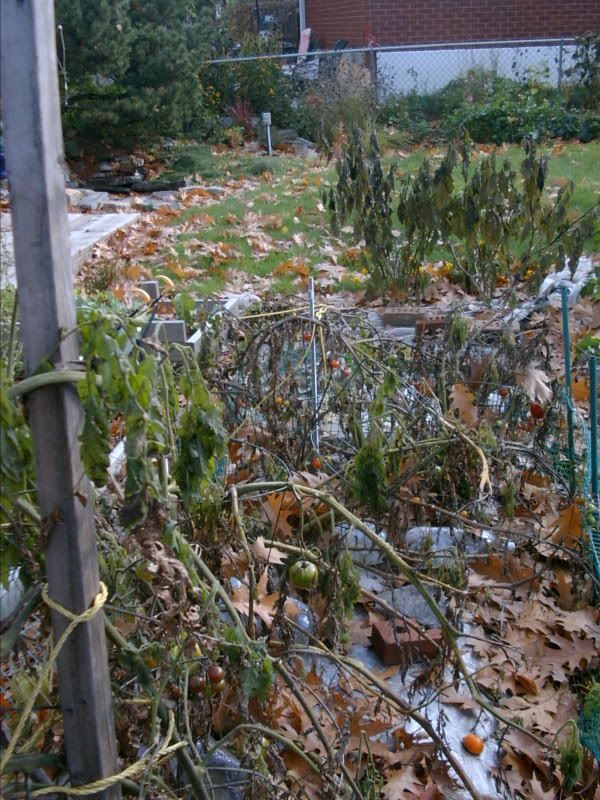
It looked like we might have had a November tomato, but 2 days before, frost hit.

Photo Sharing and Video Hosting at Photobucket
Black cherry tomatoes, various other tomatoes, and in the distance, eggplant all frost bitten

Sad, yes, but not to despair, I still have my cabbage, brussel sprouts, kale, chinese cabbage, tatsoi, broccoli, rabe, as well as root crops and other greens.
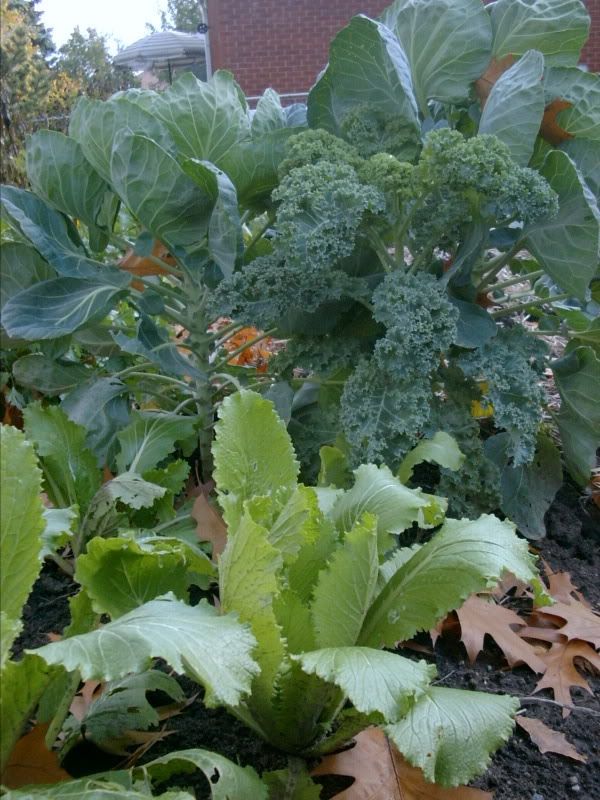
Photo Sharing and Video Hosting at Photobucket
From foreground back: chinese cabbage, kale, and brussel sprouts


Caution Gardening 201
For the not quite novice, the forgetful, or the bored.

This is the tale of two vegetable families.

The solanums

These are warm weather lovers. They drink in the sun, and fear frost. With the exception of the potato, it is the fruit that we eat. They should be started between 6-8 weeks before the last frost date, eaten with gusto at the height of the season, and then bid farewell to at first frost in the fall.

For most neophyte table gardeners, tomatoes are at the top of the list of vegetables they grow. They are relatively easy and the taste fresh from a backyard garden is without comparison. I credit the growing requirements of the tomato as part of the reason that so few beginner gardeners are aware of the best practice for growing another group of veggies.


The brassicas:

Ah, delicious and very healthy brassicas, all are quite cold tolerant. Some are extremely hardy and will survive vicious winters in a cold frame, such as kale, tatsoi, and mustard greens. Others, require a bit more pampering but like purple sprouting broccoli, will happily overwinter in mild winter areas. Most, in fact, prefer cooler weather. Or, should I say, that to get the most out of the vegetable and prevent bolting, you need cool temperatures. For gardeners with a short growing season or little strong sun (because of fog or rain or both) or where it is rarely warm enough to grow a good beefstake tomato, these crops fill in the garden.
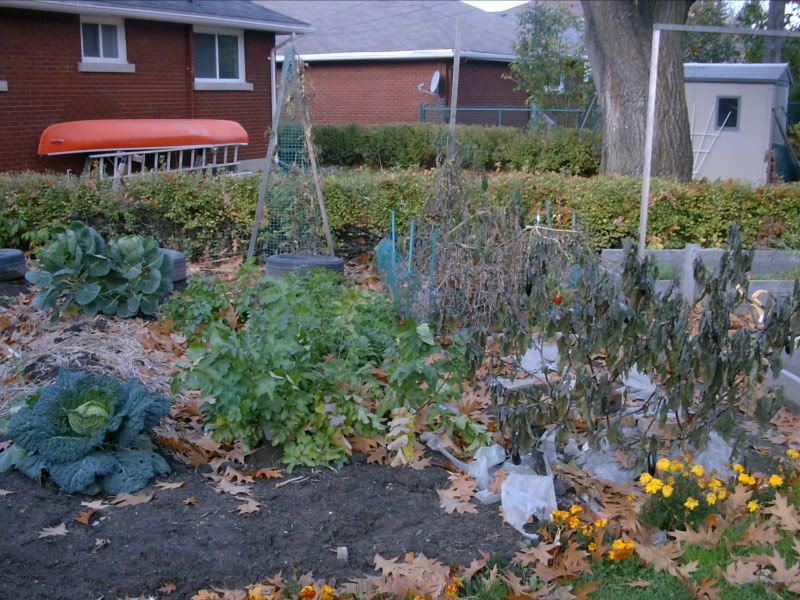
Photo Sharing and Video Hosting at Photobucket
Left to right, brassica, parnsips and parsley then dead solanums.

They can be put out when soil temperatures are still on the cool side. Under cloches, and coldframes, I started some fabulous savoy cabbage this year when we were still having light snowfalls. The quick growing brassicas, like short season cabbage, spring broccoli, and any of the leafy greens such as broccoli rabe and bok choy are great early season choices. If you don't have a coldframe, try pop bottle cloches.

Then mid-summer, start another crop of the quick growers to mature in the cool temperatures of fall. Many brassicas such as brussel sprouts and turnips, taste better after being bitten by a few frosts. Starches are converted to sugars to lower the freezing temperature of the vegetable so they are sweeter.

Even if you don't love these tasty treats (and how could you not LOVE BROCCOLI???), grow them just so that your garden doesn't look so sad after first frost.
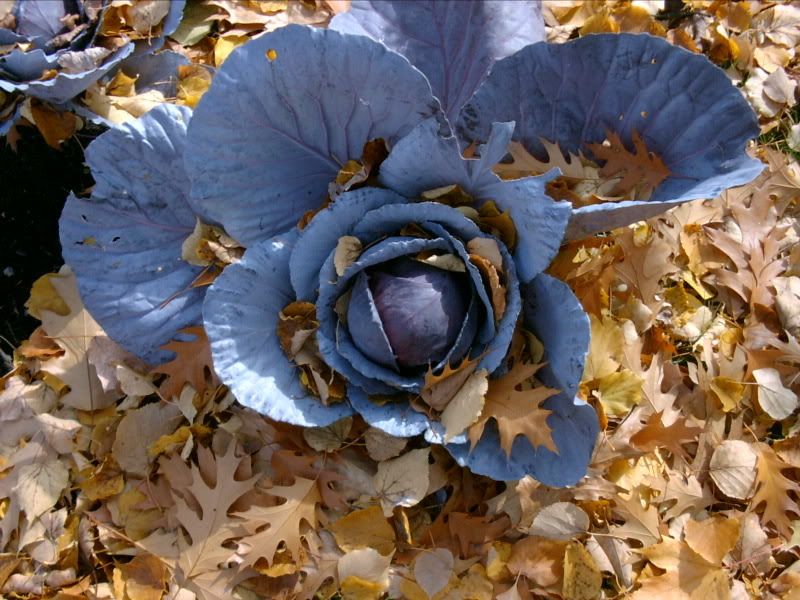
Photo Sharing and Video Hosting at Photobucket
Long season purple cabbage beautiful contrasted with fall leaves, don't you think?

Links

Coleman's Four Season Harvest
Fall Crops - tips on planting
Fall Crops - an equation
Virginia Tech - brassica growing tips


Thursday, July 19, 2007

Garlic Harvest and Types

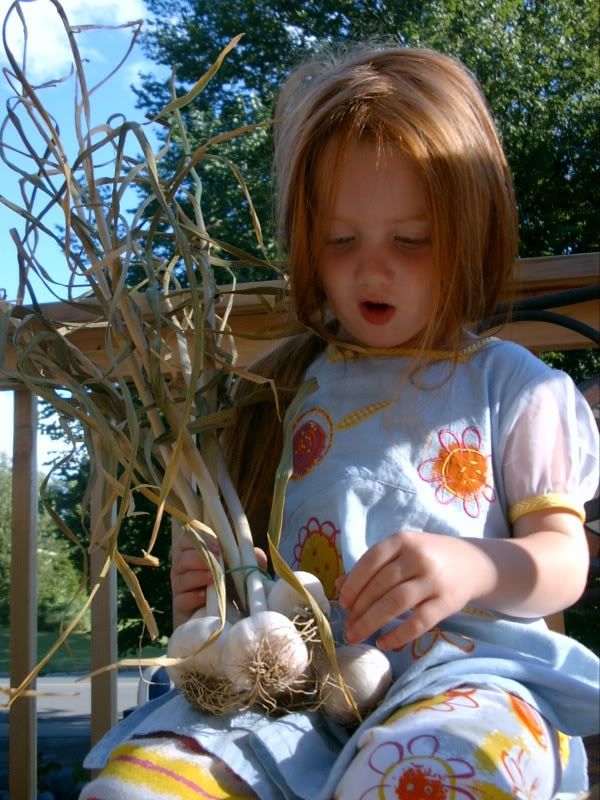
I am taking in the harvest a tad early because I need to make room for some other plantings. However, the garlic bulbs are still sizeable:

Photo Sharing and Video Hosting at Photobucket
My eldest and a bunch of garlic.

These are a hardneck variety, perhaps Russian Red as they have red skins inside though I can't be sure. My plant labels disappeared what with the many feet of snow, the great thaw times 2, various critters and helpful children.

I believe I planted Russian Red, Music and um... some other kind?

Whatever they are, they all sent up scapes (those are the flower buds on the garlic, a delicacy in themselves). They are also all deliciously fresh and crisp unlike those dried out, wimpy store brought ones.

All the varities I planted were purchased at the Carp Garlic Festival so have adapted to local growing conditions. It's a great way to get a variety of garlics to try at a reasonable prize if you are in the Ottawa area. Best of all, you can spend all day tasting garlic treats without a thought to your breath. Everyone's wearing the same perfume there.

But I promised you a short tutorial:

Hardneck versus Softneck.

The first difference is obvious, hardnecks, like in the above picture, have a hard stem - don't try and braid this kind of garlic.

But there is more, hardneck tend to flower giving you an extra crop of delicious scapes before the bulbs are ready. They also are the preferred crop for many northern growers and store about 3-6 months.

Softnecks are apparently more adaptive and productive and given the proper conditions will store for up to a year. However, they are more commonly grown in southern climes. That's not to say that they will not grow up north. They will.

My experience with my own garden is that the hardnecks are much more productive and healthier looking in whereas the softnecks were smaller and more prone to yellowed leaves. However, I have not tried a huge sampling of different varities yet!

Links:

More about different types of garlics
Garlic growing link, lists varities
How to braid garlic
Garlic SHOW braid - crazy fun

Wednesday, July 4, 2007

Brassicas and bonus crops

Second Chance Cabbage


Photo Sharing and Video Hosting at Photobucket
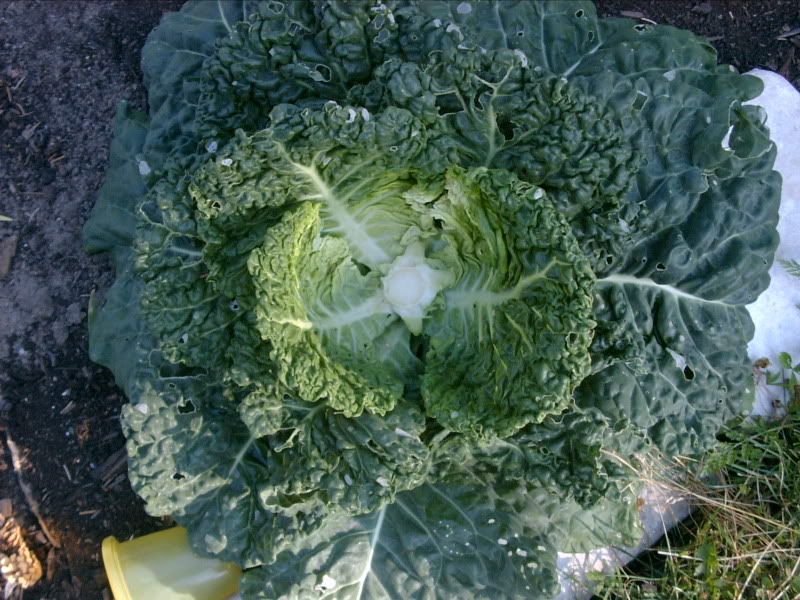
Savoy Cabbage harvested


Where once there was a delicious young savoy head, now there is nothing but an empty middle. But don't worry, the cabbage plant has not given up yet. It may yet produce a second crop of smaller, more bite sized heads. Here's how. Cut the cabbage head off the leafy base. This next step is optional but some suggest then making a cross in the stem bit that's left. I discovered that this really does work accidentally one year when I was lazy about removing the old cabbages... Apparently, the cabbages will form loose mini-heads between the leaf axils.


This works best with shorter season cabbage, by the way, though mine were long season cabbage which sprouted in the 'spaceship' greenhouse.


Bountiful Broccoli


Broccoli is also well known for its ability to re-bud. Some broccoli varieties are called sprouting and form an initial head of varying size which when harvested is followed by a succession of smaller heads. However, most regular broccoli will also do this. If you want a steady crop of mini-broccolis forming at the leaf axils, then look for this quality when buying seed.


Tasty Kholrabi heads and tails


Photo Sharing and Video Hosting at Photobucket
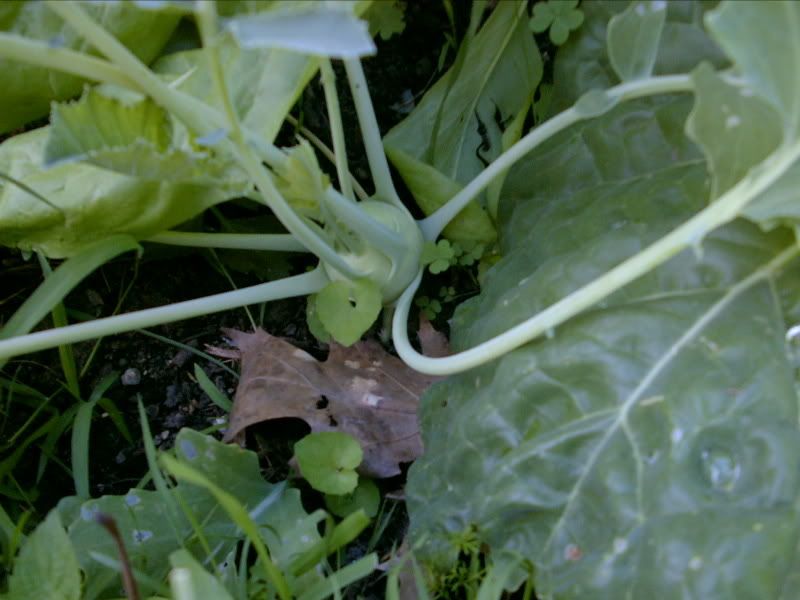
Half-grown kholrabi


When harvesting my kholrabi, I asked myself, can I eat the leaves? Maybe I was hungry, maybe I just hate wasting something edible. Anyhow, the answer is 'yes'. I cook them rather like collards. In fact this goes for all the members of the vegetable brassica family that I have looked up so far. Apparently the younger leaves are less tough and sweeter. Frost will also improve their flavour. So after you yank the plant, why not cook yourself up a plate of greens?


Links:


http://www.garden.org/foodguide/browse/veggie/broccoli_harvesting/599
http://www.bonnieplants.com/Default.aspx?tabid=325

Thursday, June 28, 2007

New potatoes - the intermission harvest

And now we'll have a short break in the normal growing season to pick some new potatoes.

Photo Sharing and Video Hosting at Photobucket
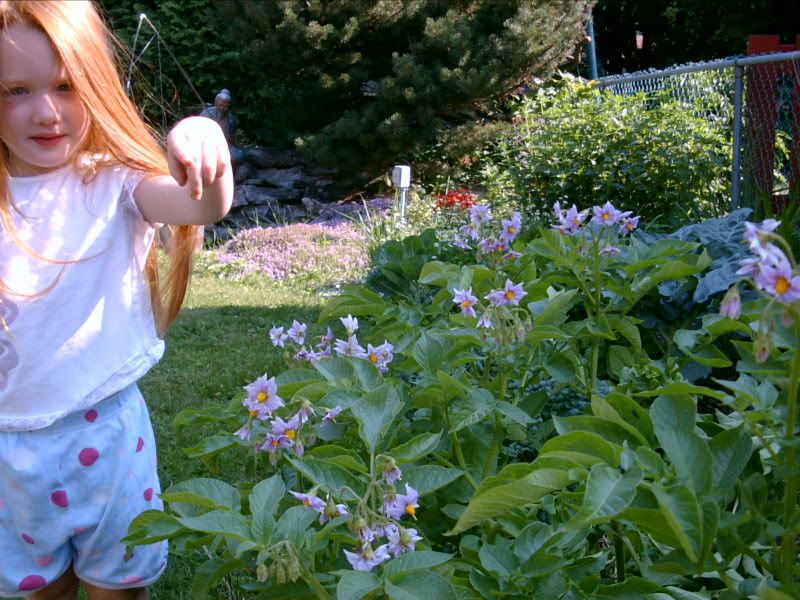
Potato plant in full flower beside my other assistant (she was complaining that her sister was hogging all the blogging limelight).

Potatoes plants normally start to form tubers, ie. potatoes, when they start to flower. You want to wait until they are well in flower before rooting around for the intermision crop. (Apparently, some varities will not flower or flower late so the above does not apply. The authorities that told me that said to wait about 65 days and then to check for new potatoes... I have no experience so good luck! I grew Carlton and they flowered just as expected, a lovely flush pink).

Another good tip, is that new potatoes are often ready at the same time as ripe peas. Many recipes call for using both. This will depend of course on your varities (use early varities for new potatoes), and climate and - insert usual gardening qualification*.

Hortiphilia Fact

New potatoes are immature potatoes that are harvested before the potato plant dies back, which is when you would harvest maincrop potatoes. They have a delicious flavour, delicate skin, and cannot be stored.


Harvesting New Potatoes

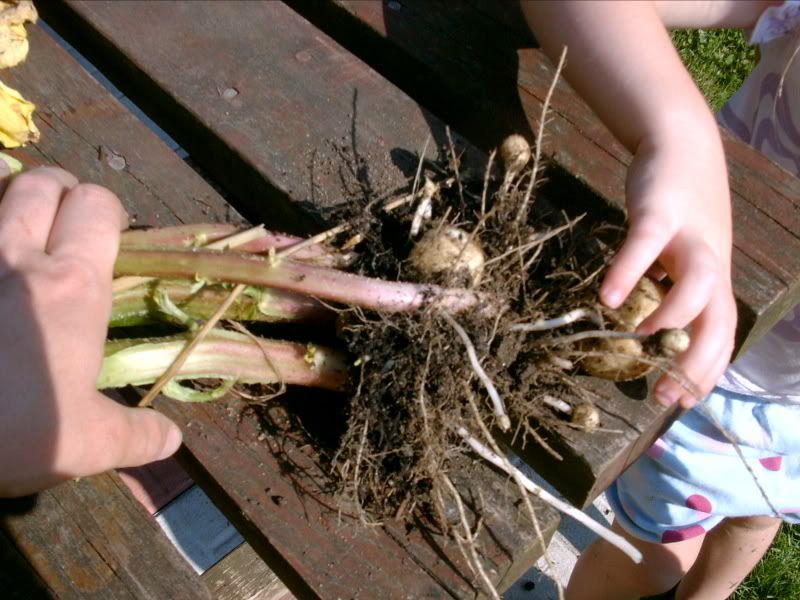
The best way is probably to plant your early season potatoes in mulch such as straw to make rooting around for the little guys as simple as lifting the straw. I like to do things the hard way so I just yank up several plants. This of course means that I sacrifice quantity later on.

Photo Sharing and Video Hosting at Photobucket
Potato plant with some good sized new potatoes and several very small potatoes still developing.

* Usual Gardening Qualification: Climate, Zone, Variety, Weather Fluctuations including rain, heat or growing index, Soil type and Quality, Pest Prevelance, Weeding Vigilance, Pet Damage, Forgetting to plant on time, Spilling beer on crop (not sure how this would affect it, we should do a trial), Children's Feet or Soccer Balls, How you speak to your plants, and so on.


Links:

Agriculural Pictures of a maincrop potato harvest

Fun site on growing potatoes

Monday, June 18, 2007

Saving seed - the purple podded pea

When saving seed, nothing is as easy as peas and beans. Here is an example of a trade from a Bifucated Carrot, a blogger that I read (and admire) regularly. He's the foremost in political gardening I've read yet.


All the way from Amsterdam, he sent me a package of yellowish pea seeds - the infamous purple podded capucijner pea. In great anticipation, I planted them around my grape trellis (the immature vine will be trained into a weeping grape). The bunny cut some of the young shoots off before they were much past ankle high. I guarded them with green plastic netting (best defence against pests - barriers). They soft green leaves with purple at the stem joints, climbed vigorously. They are now topping the trellis and the pods are indeed a deep purple.


Here are some of the flowers:


Photo Sharing and Video Hosting at Photobucket
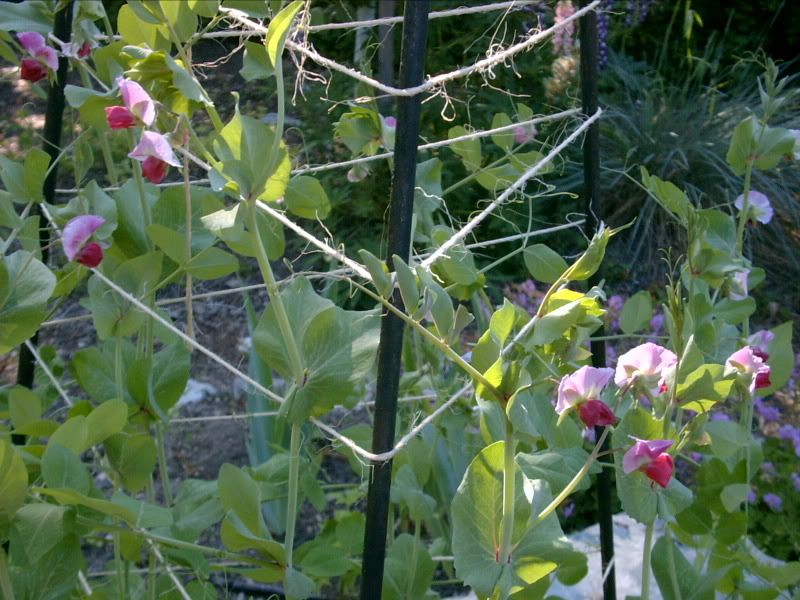
Purple / Blue Capujiner Pea


The pea is intended on being used for soups. This year, I'm simply saving seed but next year, watch out! There will be a good sized plot devoted to them beside my favourite dried bean - Cherokee Trail of Tears. Incidentally, this is the bean that went in the other direction, from Ottawa to Amhersterdam.


How to save pea seeds:


The great thing about peas (and beans - much of the following counts for them too), is that they are inbreeders. That means, that they do not suffer a loss of vigour after several generations of saving them from a small gene pool. It still is desirable to save from more than one plant but it is 'possible' to save from just one. They also are self pollinating, meaning that theoretically you should have very little mixing and mingling between plants. The variety that you save should come true.


Accorinding to seed saving guru Suzanne Ashworth in Seed to Seed:

'Pea flowers are perfect and self-pollinating. Most references indicate that the
flowers are pollinated before opening and that crossing is very minimal... Pea
varities should be separated by a minimum of 50'. Blossom bagging or caging* can be used to assure seed uprity when it is necessary to grow different varities
side by side.'


*Bagging and caging are both techniques used to isolate self-pollinating species. Bags of remay cloth or other light weight breathable material can be placed around the developing flower heads of plants like tomatoes or peas so that no insect can get in to do a little cross pollination mischief. Caging is bagging on a big scale - cover the whole plant in a constructed cage lined with something like remay.

If you decide to save seed, pick the plants with the most desirable charateritics. If earliness is important to you, then instead of picking those first peas, save that plant (assuming it also shows other characteristics that you want) for seed. Mark off any plants that you want to save for seed and give them lots of attention.


Then wait until the pea pods are fully mature, even dry on the stalk. However, be careful to watch the weather. Once the peas are mature, they may sprout inside the pod if soaked with a lot of rain. If rain is expected, you can pick any pods that are mature to dry inside. (I write the above from my experience with beans). Careful to discard any peas that are damaged, or appear diseased.


Once they are FULLY dry, remove from pods, and then let the DRY MORE. Forgive the emphasis, but slightly wet seed that is placed in a sealed jar may rot, and will just keep less time.

Spread them out in some dry, warm place until they are really hard. Then store them in an airtight container, in a cold or cool dry place.


If you select carefully, your crops will become more and more acclimatized to your garden!


Links:


Another link about the purple podded pea - seed savers

Saving Seed - general

GeBaPro - school children run pea diversity project

Tuesday, June 12, 2007

Fall Veggie Gardening

(Warning, this is a gardening 201 post)

As it is heading into the heat of the summer, and your beans are reaching for the sky, the tomatoes are flowering, and the peas are plumping out, you may not be thinking of starting little seedlings but think you could!

There are a number of plants that perform much better when started mid-summer to mature in the fall. These plants are often the ones that are very tricky in spring. Cauliflower, for example, should be started on a hot bed, or inside to be planted when temperatures are above 7C but early enough so they won't bolt before forming good sized heads before the hot weather comes in.

Instead, (unless you live in a very mild summer zone), you'll have better results if you save cauliflower for your fall garden. Many of the cold hardy plants can be seeded this way to form bigger, juicier, sweeter results.

Here is a list:

1. Brassicas: short season cabbage, brussel sprouts, kholrabi, broccoli rabe, kale, turnip, chinese cabbage, bok choy, tatsoi etc...

2. Roots: turnip, beets, carrots, salsify (for spring harvest)

3. Greens: spinach, lettuce - heading especially, chicory, mache etc...

4. Other: Second crop of peas, florence fennel

5. Consider even starting a second crop of warm weather crops such as beans, summer squash or corn if your growing season is long enough.

When exactly should you start your fall garden?


Depends on the veggie, but you want to count backwards before your average hard frost date (light frosts will sweeten the flavour of most of these veggies) so that they will mature in cool but not frigid weather.

Okay, Ottawa Gardener, what are you starting?

Even in the same region, all gardens vary because of soil, sun, microclimate etc... but if it counts for anything this is what I have planted already:

Brussel Sprouts, and Kale.

Over the two weeks:

Second crop of carrots and beets
Second crop of peas
Salsify
Chicory

In mid-late July:

Florence Fennel
Turnips
Bok Choy
Fall Broccoli
Broccoli Rabe
Endive
Tatsoi
Kholrabi
Chinese Cabbage
Short Season Cabbage
Various greens
Cauliflower

Flowers:

Forget me not (June)
Flowering Kale (early July)
Delphinium (seed in August)


Nursery Bed

Another great reason for a nursery bed (I must make one) is that you can start your seedlings in it and then transplant them to the garden proper once a spot for them opens up such as after harvesting the first carrots, peas or lettuce.

Just 1 more tip:

I am NOT the most experienced veggie gardener in the blogosphere but if you are going to take my advice, then know that most of it comes from being burned in the past. This is my fall gardening tip. Despite what I just wrote above, I tend to split seeding in half, starting one half 2-4 weeks later than the other to allow for unpredictable weather patterns. (If only I remembered this when starting my tender veggies inside. This year, I swear! Half in March, half in April. Repeat after myself, half in...)


Links:

Useful graph of vegetable frost tolerances
Useful calculation on days to maturity with 2 weeks 'fall factor'
Master Gardener article on fall gardening