Showing posts with label overwintering. Show all posts

Tuesday, April 15, 2008

Snow 2008 - the remains

So we are getting closer to NS day (no snow day).

Here is what my yard looks like:

Photobucket
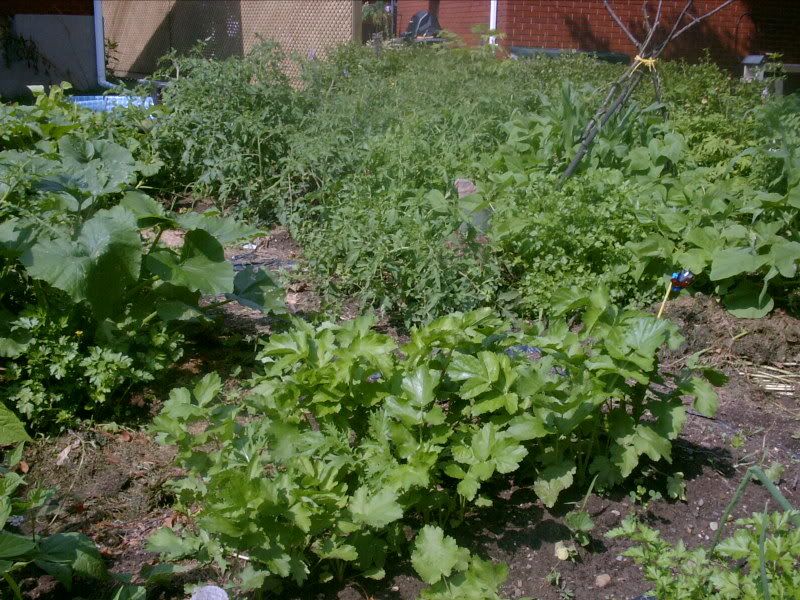
View of the veggie garden with receding glacier.

Photobucket
The front spiral garden popping out of the snow.

With so much snow, plants were actually growing under there. Crocus were in full bud, and there was enough insulation to keep this chinese cabbage overwintered:

Photobucket
2nd year chinese cabbage still alive under snow.

Parsley reliably overwinters here and will self-seed if you let it:

Photobucket
Luminescent in the morning sunshine: a crown of parsley

Thriving in the polytunnel thingy is self-seeded corn salad / mache:

Photobucket
Yum! Mache / corn salad

And finally tulips growing through gravel mulch to join the mass of bulbs full of promise if the local rodentia - bunnies and squirrels - don't behead them all.

Photobucket
Tulips will not be deterred by gravel mulch!

Friday, March 28, 2008

Pepper Recovery - the overwintering tale

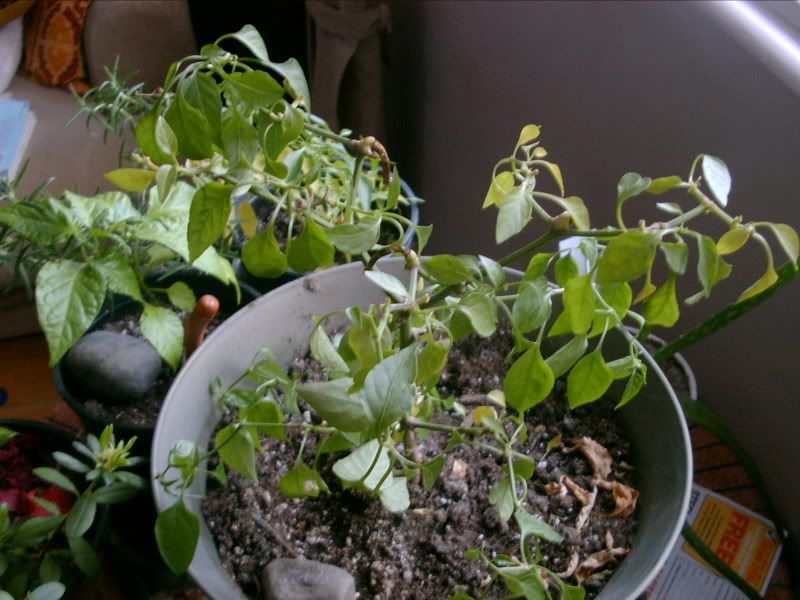
My Fatali and Long Cayenne peppers have been attacked by aphids and I believe spider mites this winter. They have lost a fair number of leaves and all developing buds but then with the longer days, things are improving.

Photobucket

Much to my surprise the long cayenne appears to be bouncing back. I didn't take a picture of it at its worst out of respect for its dignity but suffice it to say that it had lost almost all of its leaves. The only reason I didn't ditch it was because I hesistate to end my experiments prematurely. When it started to re-leaf I thought that the leaves would come in even smaller than the decreased size they were before they all fell off so am pleasantly surprised by their increasing diametre. It even has some flowers on it.

I did repot it once with enriched (compost) soil to see if it was lacking nutrients so maybe that was the solution?

Anyhow, this year it will be planted in the garden as I will be gone for much of the gardening season (cries to herself) and won't be around to baby potted plants.

The Fatali has some leaf buds that haven't opened yet but I have hope. It hasn't lost all of its leaves but it isn't looking its best.

Links

Overwintering and pepper seedlings (really just an excuse to bring you a new gardening blog you might not have come across)

Thursday, March 6, 2008

Overwintering Peppers
- a long winter of bugs

Photobucket

This is the first year that I have had to deal with 'bugs' on my overwintered pepper plants and they have taken their toll but none have entirely succumbed yet. I have done the soapy water thing, the crushing insect thing and the hard water spray thing. Now, I mostly just pick off the aphids when I see them, and put a water bowl in the pots to increase the humidity and scare off any spider mites.


My Fatali is doing okay. It has lost a lot of leaves but it is bravely trying to bud up and leaf out again.


My long cayenne is struggling along. It self pruned off its top last year and lost almost all of its leaves this year. Now it is sporting new aphid ridden leaves so we will see. I have noticed that over the years, the leaf size has dropped. Does this mean that it is near the end of its lifecycle?


I h ave only kept two peppers over the winter this year due to a lack of south facing window space but next year I intend on keeping some small fruited sweet peppers indoors as an experiment too. I can just see my husband's face now. I also hope to make sure there are no, absolutely no, aphids on them before I take them indoors!

---

Want to know more about overwintering peppers - please follow the pepper tag for lots more links and more about my saga.

Thursday, December 27, 2007

Next year's garden - success and failure
The alliums

A series of posts discussing my feverish garden planning.
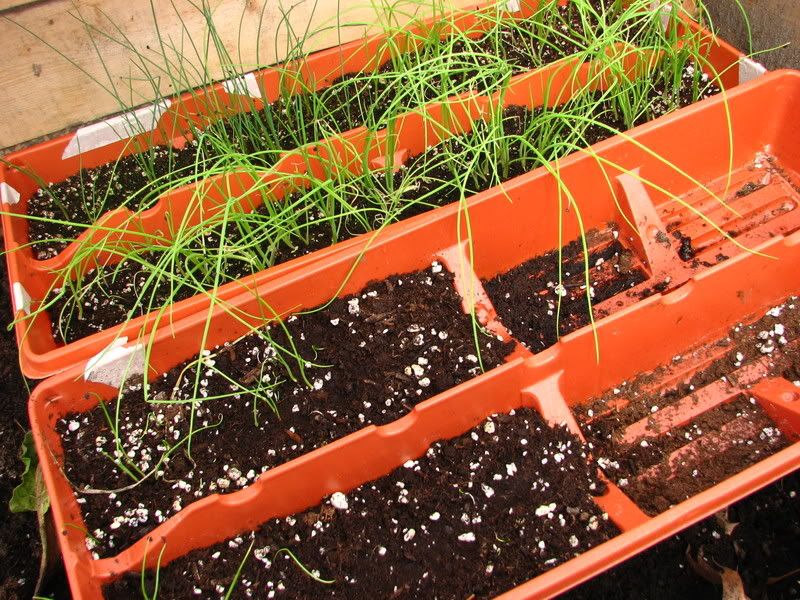
Photobucket

The alliums

Every year, I have grown onions: Onion sets, onion from seeds, started onions from flats. Every year, I have harvested onions: Big onions, small onions, onions riddled with wireworm.

You have to start the seeds early, space properly, weed judiciously, and hope they store well. Even though, I always start lots, I find we run out of onions too soon. In order to grow enough for our families needs, I think I'd have to devote a quarter of the garden to them, and there are other plants that I would prefer to grow. They also are insistent on having lots of light, water and food and little competition. Not only that but they are outbreeders, meaning I don't save the seed and their seed viability is low meaning that I have to buy new seed often.

All in all, I have decided that we would stop growing (and therefore cook less with) onions, but instead grow (and cook with) many other members of the allium family.

The Perennials

Chives: Super easy to grow, self seeding, with attractive, edible flowers, this plant is a must for any herb garden. Just clip few off a handful of slender leaves to add to your sauce or salad when needed. Garlic Chives is a vigorous cousin but is a bit too boistorous for some gardens - use liberally as a pot herb and deadhead to prevents numerous volenteers.

Topsetting onions. Also known as walking onions. These onions form bulbs at the top of stems that bend to the ground and root. Use these as you would pearl onions. You can also use them as green onions and best of all you can eat the bulb itself which is not huge but big enough.

Potato onions or multiplier and shallots: Last year, I stuck some shallot bulbs in the ground and only two came up. Apparently, they behave rather like garlic by splitting and then growing bigger. According to at least one source, multiplier onoins have a two year cycle - the first year forming bulblets and the second year these grow fatter. You could harvest some and replant the rest. They also keep well.

Bunching onions: I haven't grown these yet either but plan on dedicating part of my garden to them. They are perennial, productive, early and tasty. Oh and they are easy to grow! Hmm.. maybe I'll give part of my polytunnel garden to them. Next to the chicory perhaps.

Garlic: As I was writing this, I realized that garlic is a perennail too. I grow it successfully every year and add to my varities by purchasing locally grown heirloom garlic at markets. Using locally grown varities increases my chances of success. I need to grow lots of garlic too but I happily devote space to it. Most of my garlic is hardneck so instead of braiding the necks for storage, I tie them together and them hang them somewhere dry and room temperature. You have to love veggies that store at room temperature and low humidity. After harvesting, break apart the bulbs that you won't be using and replant the cloves to have a new crop of bulbs next year.


Others

Leeks - Isn't it great that leeks are the only allium that I haven't listed as a perennial? Many leek varities are very, very cold hardy. They will overwinter in most environments (to ensure this, mulch heavily with leaves in the late fall). They can be harvested as baby leeks, as big leeks at the end of the season and again in the spring.

Despite the fact that I have listed leeks as not a perennial (it's biennial), I intend on making a 'perennial bed' for it. Ammended with lots of goodies, I will let the leeks overwinter then drop seed. Then I'll transplant or thin the seedlings. We'll see how it goes.


Links

Root Cause on perennial onions - lots of varities discussed

Some perennial onions I have never heard of!

How to grow shallots by one of my favourite veggie info blogs: Vegetable Garden Tips

Tuesday, December 18, 2007

Overwintering peppers - another blog!

I love garden experimenters and here is one who grows peppers in a polytunnel year-round in France:

Mas du Diable

They have a beautiful blog, property and site! (Can I move there with you guys?)

My peppers

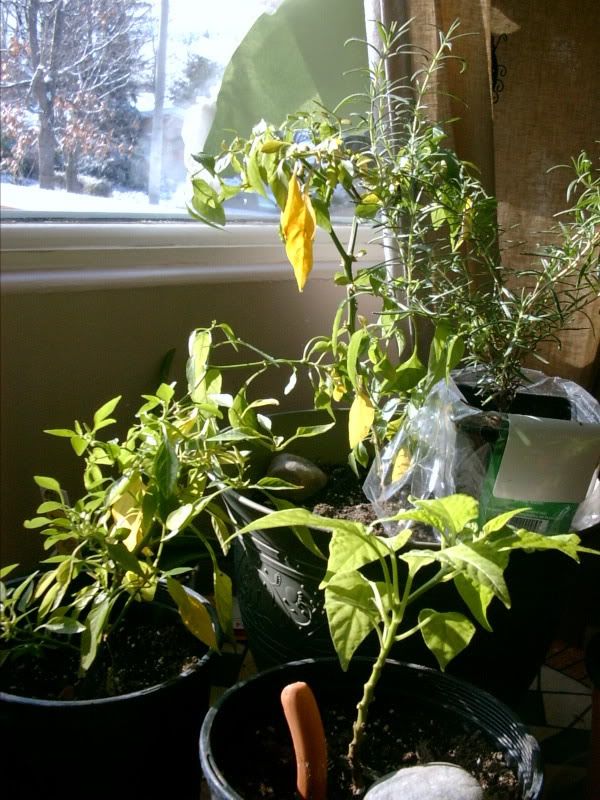
Currently, my peppers are fighting off a small infestation of aphids! I have been giving them weekly sprayings of mild soapy water and then washing them off but still the critters remain. They are concentrated on the weaker 'long cayenne' plant. Let us call that 'the fall guy'. The fatali is almost unaffected.

According to at least one site, I should let them drip dry with the soapy solution on them? I have been rinsing them off pretty quickly. I think I'll leave the soap on longer next time.

Photo Sharing and Video Hosting at Photobucket
Hello in there little peppers. The white stuff at the foreground is you guessed it, the smoothering white of winter. I mean snow.

Links

More on Aphids on indoor Pepers at Urban Chiles

Sunday, September 23, 2007

Overwintering hot peppers - sunny season closing

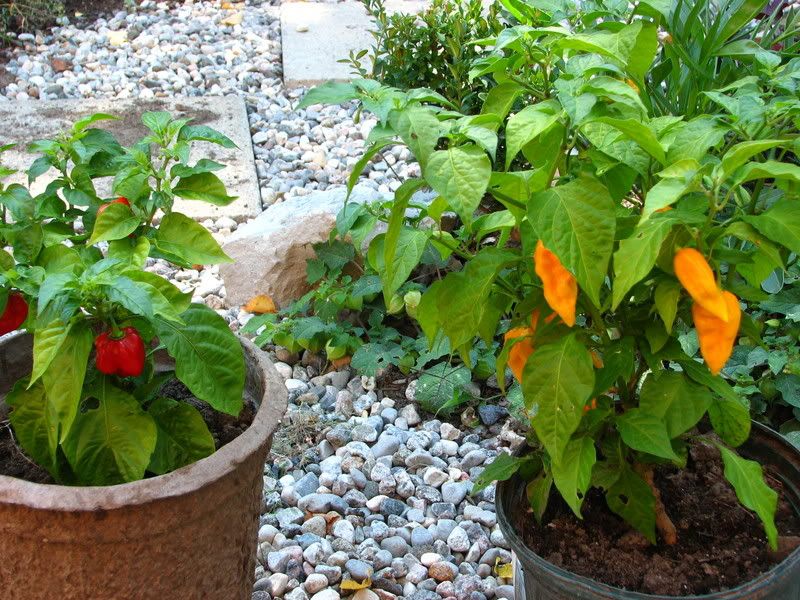
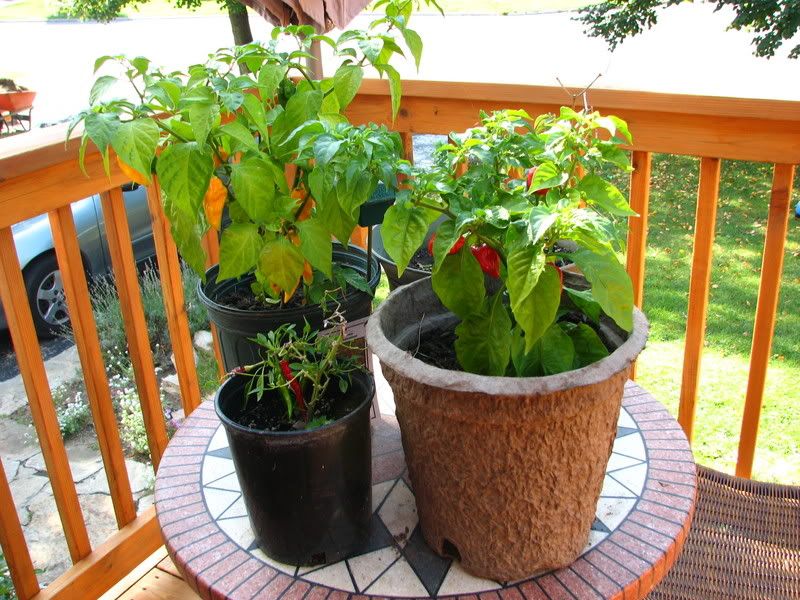
The hot pepper plants will need to come in out of the cold soon so I've dug them up and repotted them in a pot that gave room for their rootballs to expand. Despite this insult, they haven't so much as shaken off a leaf.

Photo Sharing and Video Hosting at Photobucket
Caribbean red and fatali, both habaneros, I believe.

The fatali (with yellow fruit) is doing fabulous this year (year 2) and according to my neighbour is hot HOT HOT. How hot? Let's relive the conversation.

Me: "Do you like hot food?"

Neighbour: "Oh yeah, I love hot food."

Me: "I had quite the harvest of jalapenos this year."

Neighbour: "I don't find them too hot. Just a bit spicey."

Me: "I have a couple of really hot ones. A caribean red one and fatali."

Neighbour: "I've heard of that one."

Me: "Yeah? Want to try one?"

Neighbour: "Sure."

I go and get a fatali, gingerly, wrapping my shirt around it.

Me: "Here you go."

Neighbour: "Thanks." He starts to take a bite.

My face tenses but before I can say maybe you want to cook with it or something - too late.

Neighbour:"Oh yeah, it's hot. Woah. Yeah hot. Wow. That's hot. Ah. I have to go to the backyard now..."

So I guess it's hot.

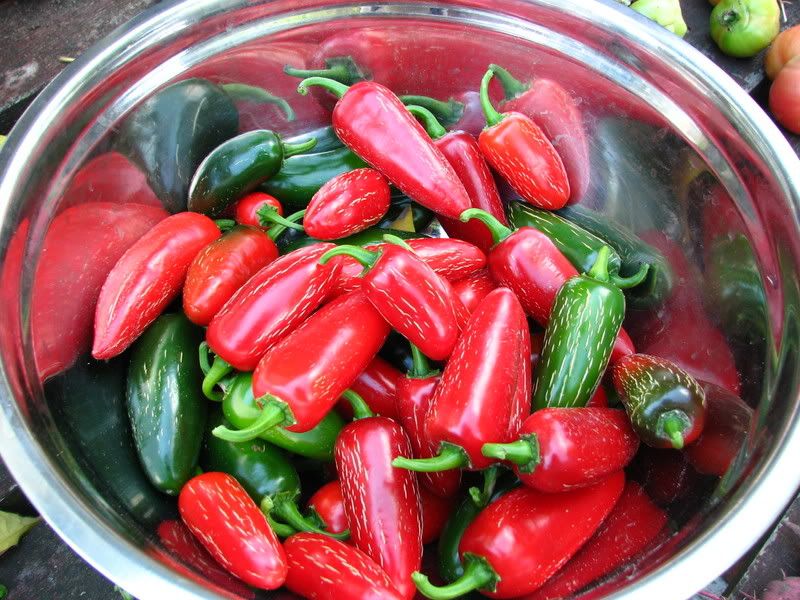
Here are my jalapenos (also hot).

Photo Sharing and Video Hosting at Photobucket
Jalapenos with stretch marks

My long red cayennes are also in their second year but the top halves have died off. You can see the small one in the foreground.

Photo Sharing and Video Hosting at Photobucket
Hot peppers potted up for overwintering indoors, including long red cayenne.

Unlike the fatali, they were kept in irregularly watered pots all summer so I wonder if drought caused them to die back. Also, unlike the fatali that produced one crop, the cayennes produced several all summer. I'll re-pot them and see how they do this winter.

Links

Info on the Scoville Heat Scale for hot peppers

Wednesday, August 1, 2007

Overwintered Peppers - a sunny update

Perhaps, followers (humour me) of my overwintering pepper saga are curious what has happened to the darlings now that they have come out the other side of darkness and cold.

Well, fourty leaf fatali has a little surprise for us:

Photo Sharing and Video Hosting at Photobucket

Finally!

The Recap:

To save you from searching through links to find out all about the excitement of fourty leaf fatali, let me tell you a tale.

Once upon a time, there was a man who was married to a plant crazed lady. She made him watch the children while she attended some excruiatingly boring seed event with a whole bunch of long haired organic types. He would have been dozing in the corner if it wasn't for their baby and toddler. To try and entertain the man, she suggested he pick out a hot pepper variety to grow.

He picked out fatali. The name, at the very least, sounded promising.

However, the plant proved to be anything but. It produced a ground total of 4 leaves the first year. Yes, four. Admittedly, it was smushed into a pot with two other peppers but that was only because the crazy plant lady assumed that the 2 leafed seedling was going to keel over at any minute when potting time arrived.

Well, crazy plant lady decided to try one of her crazy plant projects and brought the overcrowded pepper pot indoors for the looooooooooooooong Ottawa winter. She managed through much subtle negotiation to secure the coveted south window light for her babies. Noticing they looked unhappy in January, she repotted them. By this time, four leaf fatali had suprised her by turning into fourteen leaf fatali. Maybe it liked cold wintertime windows and low angled sun? It also produced buds, would it grow fruit? No such luck! The beds fell. The leaves started to look sad.

Crazy plant lady sighed.

But come spring, she stuck it in the garden in the designated hot pepper spot with what she presumed were others of its kind. Unfortunately, a wind storm had knocked over all her potted pepper babies and she had repotted them hastily, forgetting to make sure they were all labelled properly so Fatali is surrounded by sweet peppers.

Then fourty leaf fatali made more buds, and low and behold fruit!

More overwintered peppers

And my cayenne plants are producing their second crop. I think I'll try and overwinter some of the sweet varities this year.

Sunday, April 8, 2007

Overwintering Peppers - the magic trick

Photo Sharing and Video Hosting at Photobucket
Long, red cayenne fruiting indoors after flowering indoors.

Tadda!

Sunday, March 18, 2007

Update on overwintering peppers: the saga

Photo Sharing and Video Hosting at Photobucket
Long red cayenne fruiting indoors

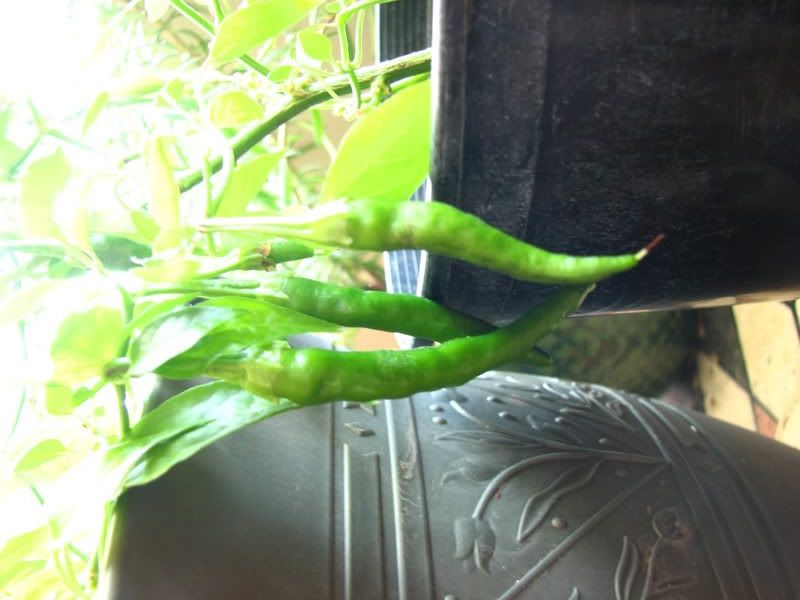
The good news is that my two 'long red' cayenne are fruiting. I was hoping that they would wait until they were outside so they could get the full push power of the sun but I'm not complaining. (Thanks Patrick for suggesting that I leave the flowers on).

However, the four(teen) leaf fatali has dropped its buds! Otherwise, it looks fine... no new growth, nothing dying. I just hope that next March, I am not writing about my fourteeny fatali's ability to resemble a plastic plant. One of these years, I'll get to taste the citrus fire of fatali.

Note on fun and games with latin names:

According to Ashcroft in Seed to Seed Capsicum chinense (which Fatali belongs to) has been reclassified as belonging to the Capsicum frutescens. I have noticed a W I D E spread use of the original so am not sure of the level of acceptance of this new nomenclature. I will report on further findings!

Floridata discusses this on their capsicum page.

More on overwintering peppers:

Cayenne in flower
Fatali budding
Latin names of hot peppers
Overwintering Peppers - the beginning

Links:

Fatali in flower and a whole load of other peppers in flower. Some have purple blossoms.
Fatali fruit. It's a habenero type.
hot pepper blog
You have got to check out the maturing hot pepper plant - wow!

Sunday, March 4, 2007

Cayenne in flower and four(teen) leaf fatali
Overwintering Peppers

An update in pictures:

Photobucket - Video and Image Hosting

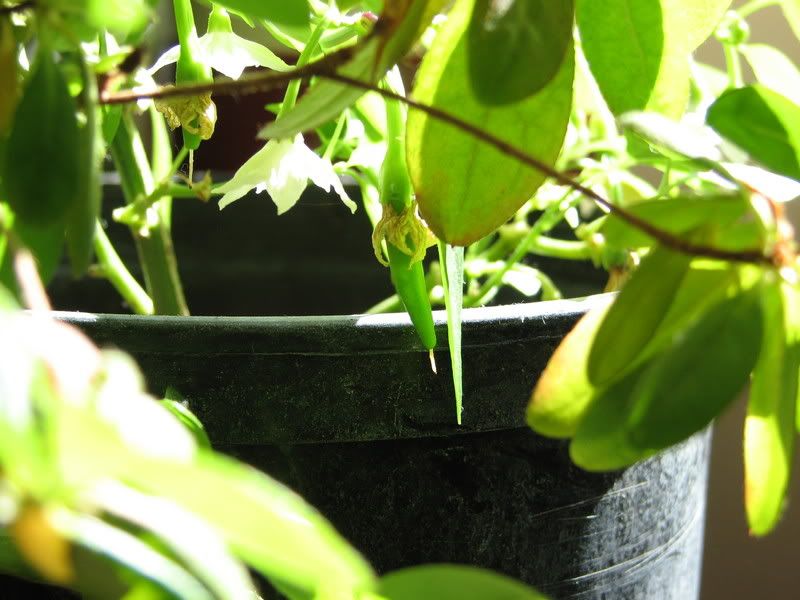
The smaller of the two long cayenne peppers is producing tonnes of flowers. There are even some signs of immature fruit just starting to swell.

Photobucket - Video and Image Hosting

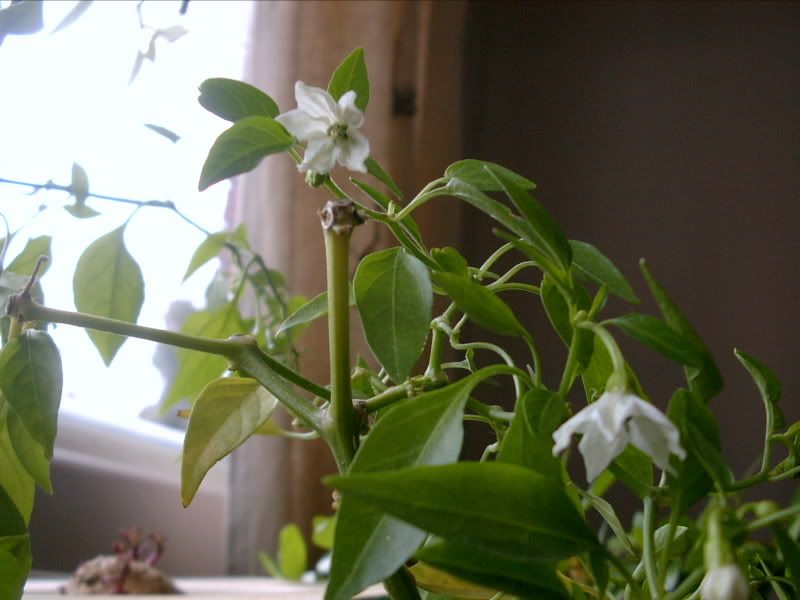
The previously named 4 leafed fatali has shocked me by putting on a magnificent flush of leaves and even producing flower buds. I'm waiting impatiently for them to open as they grow oh so agonizingly slow.

Photobucket - Video and Image Hosting

For those of you with unusually accute vision or who are afflicted with hortiphilia, you may now be able to see the buds drooping delicately down.

(abundant alliteration accompanies alegere?)

Only two more months before these go outside, maybe less time before I can put them outside for short soujourns under cover. Right now, they have been inside from October onwards - 4 months!

Optimistic Gardener Warning

Will my mini bell peppers make it if I try and overwinter them too? How about tomato stem cuttings?

Links:

Hot Peppers - more facts on growing by self sufficient (ish), a fun site on urban living
Propagating Tomatoes by stem cuttings

Sunday, February 11, 2007

Hot peppers are budding again

Photobucket - Video and Image Hosting
It wasn't so long ago that I was worried about the demise of my overwintering hot peppers. Well, low and behold, much to my amazement (can I think of any more cliches?), I see buds. The long cayenne has been steadily producing flower buds which I have been plucking off. However, worried that this may be hurting rather than helping (what do I know), I stopped and the healthiest parts are producing thick buds again.

But the big news is that my Fatali - a.k.a. four leaf fatali - (as that is all it had all last season) has flower buds. They are small. The kind of thing that I wouldn't force my non gardening obsessed friends to find, but they are there!

Tuesday, February 6, 2007

A pepper by any other name...

Photobucket - Video and Image Hosting
Foreground: Fatali
Background: Two long cayenne (loosing leaves) and a rosemary plant

First, more fun and games with latin names.

On a previous post, I was hesitant about calling sweet peppers perennials even though I was pretty sure that they were because a 'internet person' had stated that they are called Capsicum annuum. In other words as close to annual as you could get without being so. His reasoning concluded that since they were probably spent by their first year of growth, it didn't matter that they could live another year, or more.

I knew that this wasn't true of hot peppers whose spectacular pictures I had seen, but I wanted to do some more investigation before I made any proclamations about sweet peppers.

Well, my research has lead me to believe that peppers are (most if not all) short-lived semi-woody sub-shrubs. The most commonly grown species is Capsicum annuum which includes many hot and all? sweet peppers (see list below for more details). There are some other Capsicum species from which we get hot peppers such as Capsicum frutescens. I mention this other species in particular because it may explain a mystery of overwintering my own peppers.

Update - Overwintering Peppers

I brought in one overcrowded pot of hot peppers to try an overwintering experiment. They were doing really well. I have not had the bug problems experienced by many other growers and after the initial shock, the plants had all grown a new flush of leaves and blossoms.

Now the embarrassing part. I told you that they were overcrowded right? Yup. Three hot pepper plants had been stuffed into a medium sized pot. It originally was supposed to contain one fatali pepper but my seeds germinated poorly, only one made it to transplating age and then it just sat there with a couple leaves all season. So when someone offered me a couple of long cayenne plants I said sure and threw them in the pot with the fatali. (By the way, the long cayenne produced like champs even in those crowded conditions).

My overwintering project was a bit impulsive too. I just brought a pot in at random, which happened to be the one with the plants mentioned above. About two weeks ago, the largest of the long cayenne plants began to drop leaves again. So I decided in my... what to call it?... desperation to transplant the poor dears. Surprisingly this hasn't seemed to phase them at all and now they all have a lot more foot room.

The long cayenne's are dropping less leaves but don't look so happy. However, the fatali immediately sprouted when I brought it inside. It has been growing steadily and happily ever since. Could this be because it is a different species? Could it be because it was less grown up? I don't know.

I suspect that the long cayenne peppers took a turn for the worst when the temperatures plummetted several weeks back. They are facing a southern window with lots of light but of course they are also more exposed to cold temperatures so close to the glass. I must remember to draw the curtain at night to see if that helps.

Read: Overwintering Peppers

Common Garden Peppers (taken mainly from Pepper Mania):


  1. Capsicum annuum:

    • Bells
    • Poblano
    • Cayenne
    • Cheese
    • Cherry
    • De Arbol
    • Frying Italian Types
    • Jalapeno
    • Ornamentals
    • New Mexican
    • Paprika
    • Pequins
    • Tepins
    • Wax
    • Serrano

  2. Capsicum baccatum:

    • Aji

  3. Capsicum frutescens (according to seed to seed by Ashcroft, the species formally known as chinense are now included here):

    • Tabasco
    • Scotch Bonnet
    • Habanero
    • Fatali

  4. Capsicum pubescens:

    • Rocoto
    • Manzano.


Some references/links:

Great Pictures: http://petterssononline.com/habanero/peppers.php

Fantastic Site for hot pepper info: http://peppermania.com/chile_seeds.html

Lots 'o' latin names: http://www.g6csy.net/chile/variety.html

Floridata's pepper page: http://www.floridata.com/tracks/peppergallery/pepper_menu.cfm

Another overwintered pepper (scroll to the bottom): http://thomas-jefferson.stumbleupon.com/tag/pepper/


Photobucket - Video and Image Hosting
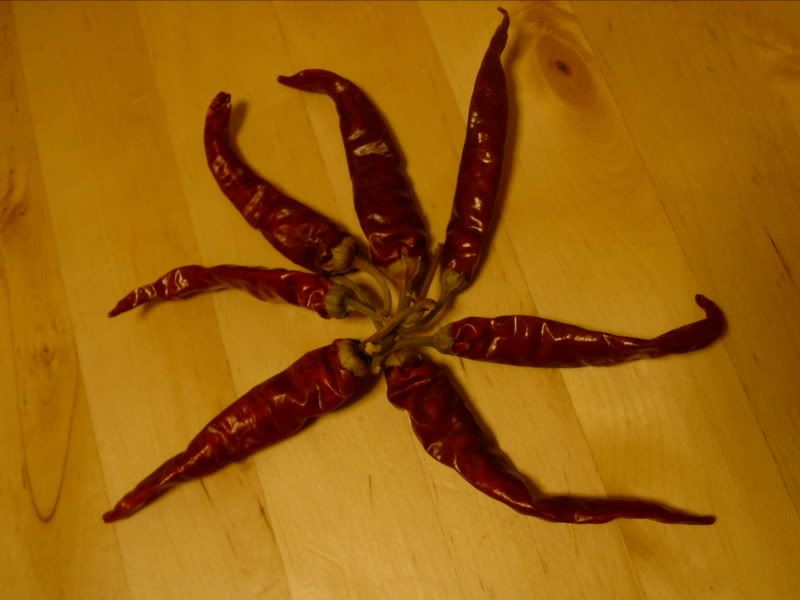
Dried long cayenne chilis

Thursday, January 25, 2007

Overwintering Parsnips

You may notice that I have a thing for overwintering and perpetual beds of vegetables. I know that normally it is only the westcoast gardeners and others in warmer climes that are all dizzy about keeping a vegetable alive so that it starts fresh and early in the spring. Maybe I'm jealous. Maybe I wish that my skin didn't feel lethaly threatened when I walked into a -30C windchill this afternoon. Maybe, but that's neither here nor there. -30C windchills are challenges just like 4 feet of accumulated snow, and percipituous killing frosts late in spring.

Back on topic - Overwintering parsnips.

Hortiphilia Fact:

You can overwinter parsnips!
Cold turns starch to sugar so spring dug parsnips are sweeter.

At least, it seems that most people can overwinter them even in zone 2/3. I read in the gardenweb forum of some really far north gardners who have self seeding beds of this divine root crop and I thought, is this possible for me? When would they flower. Would the seed grow fast enough to produce decent sized parsnips for harvest in the fall, or only in the spring. Would I be selecting for smaller parsnips? How many parsnips would I need to keep up sufficient variability in the genetic line? Will the garden plot get riddled with disease because it wasn't rotated? Questions, questions.

I think I stumbled across the answer of 6 parsnips as adequate genetic stock. I believe the source was Breed Your Own Vegetable Varities by Carol Deppe. However, I have to verify that.

Could I keep 6 parnsips aside for seeding reasons. Of course! Perhaps, an experiment is warranted... I feel an optimistic gardener warning coming on...

Parsnips in the foreground, mid-summer
Photobucket - Video and Image Hosting

Extra, extra, read all about it (or general info):

  1. Plant parsnips as soon as the ground can be worked
  2. Soil must be loose and without stones. A cheat way to plant is to take a crowbar and make a conical hole, fill with a mixture of peat moss and sand, or some other sifted light material.
  3. Parsnip seeds germinate poorly so always use fresh seed. It also germinates slowly so many people suggest marking the row or block with radish seeds.
  4. They taste better after a couple of heavy frosts as the starches are converted to sugars.
  5. You can store them in the ground over winter. I've never heard of someone mulching them first but I don't think it would hurt. Harvest as long as the ground is diggable and then first thing in the spring.
  6. You can store them in a root cellar as well.
  7. They are really tasty roasted, or in stews. We make root veggie pie out of them!

Monday, January 22, 2007

I ordered potatoes!

Eagle Creek Seed Potatoes offers gardener packs of 4 seed potatoes of 4 varities for about 15 bucks for shipping and handling. How could I resist? I ordered:

  1. Russian Blue
  2. Carlton
  3. Kennebec
  4. Cherry Red

According to my new book, the 12 month gardener you can plant potatoes in the fall, heavily mulched and then let them grow through early in the season. If you are thinking to yourself but if there is a frost, they'll be killed. Fear not:
Optimistic Gardener Warning

I read - somewhere - that the spud will just send out more tendrils. I think this probably works best if you have planted whole seed potatoes, or biggish pieces so it has lots of reserves to draw upon and if it has not grown too far. Also, in case of a frost, you could just practice Garden Safety Procedure No.1 - throw something over it. In this case, a blanket, box, or just more of whatever mulch you threw over it in the fall. I am not sure how well this would work in freeze / thaw areas but I know that ever year I get potatoes growing out of my compost in the spring so hey maybe it's worth a try.

Overwintering Peppers

After reading that:


Hortiphilia Fact
Peppers are perrenials

At least hot peppers are.

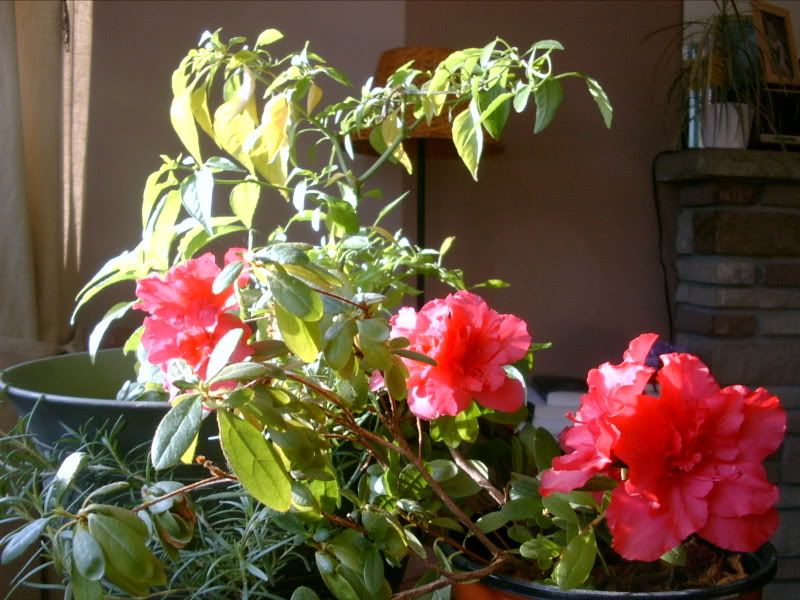
I wondered if you could keep them alive for a second growing season. Food producing plants that self seed, overwinter, or are perrenial makes me giddy! So I did some research and found that many people were keeping their hot peppers, and eggplants(? - more reseach to follow) alive to grow another season. So I brought in one of my potted babies. Here it is, a long cayenne, behind the azalea in beautiful bloom.

Photobucket - Video and Image Hosting

When I first brought it in, it experienced leaf drop but then started to grow a bunch of new leaves, and flowers. I have been dutifully picking them off so it saves its energy for another season. Hopefully, as according to, Pepper Joe they will produce an early crop next year!

Go to Part Two - A Pepper by Any Other Name...

Sites:

http://www.gardenerscorner.org/subject073929.htm
http://www.rocoto.com/overwinter.html
http://www.gardensalive.com/article.asp?ai=641&bhcd2=1169352244