Showing posts with label hortiphilia fact. Show all posts

Thursday, September 13, 2007

Sweet, sweet potato success for northern growers!

Unlike the unicorn, the bermuda triangle or the possiblity of sasqwatch in the woods, this is one tall tale, that I can verify to be true:

You can grow sweet potatoes in the north


Photo Sharing and Video Hosting at Photobucket
Variety: Jeorgia Jet supplied by Mapple Farms.

Or, at least, you can grow 'em in Ottawa. Here's is my adventure, in pictures, complete with a sweet ending:

1. I received my much awaited for package of sweet potato slips in the mail from Mapple Farms. They were limp and sad, as expected, but I planted them with great hope in my pre-warmed bed with plastic mulch.

2. The cutworms got two of my plants. Bottomless plastic cups solved the problem.
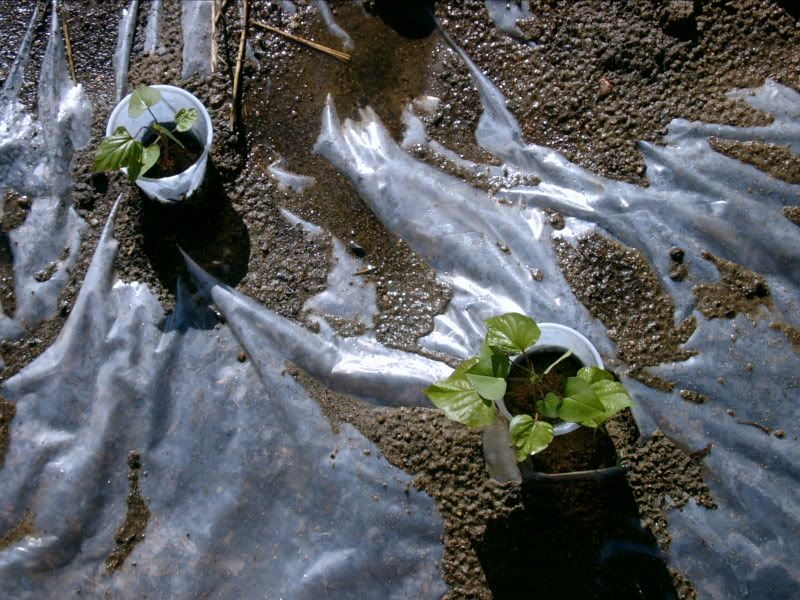
Photo Sharing and Video Hosting at Photobucket

3. They grew into nice little plants.
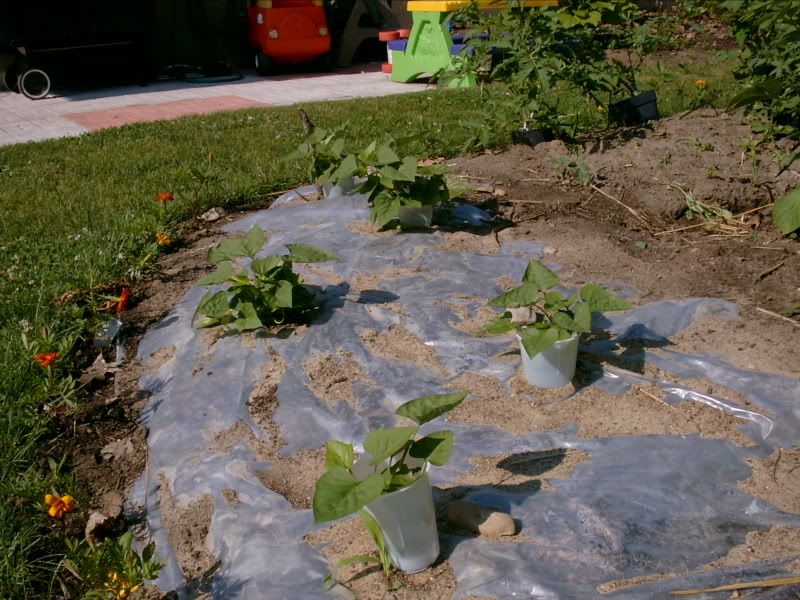
Photo Sharing and Video Hosting at Photobucket

4. And grew.

Photo Sharing and Video Hosting at Photobucket

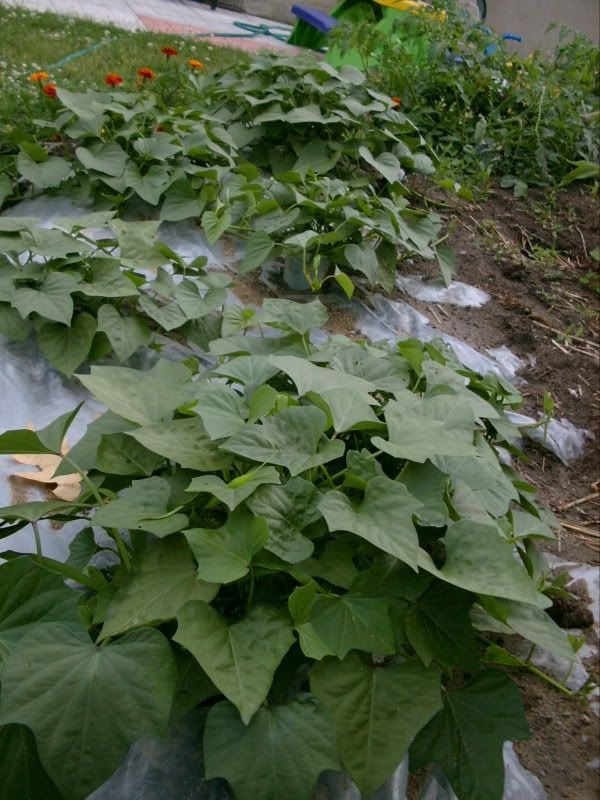
5. Until they mulched their own garden bed. Good little sweeties.
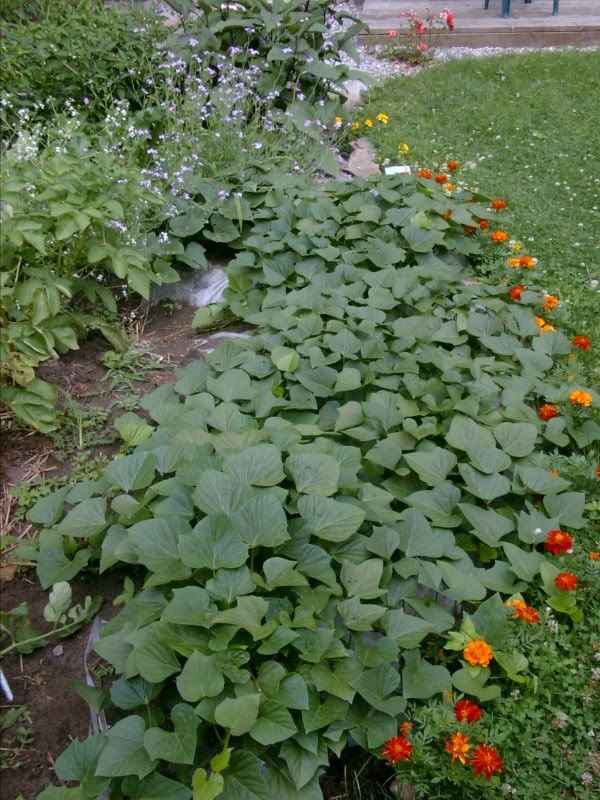
Photo Sharing and Video Hosting at Photobucket

6. Frost has been threatened on and off on the longterm forcast but nothing yet. I decide to harvest on September 14th.
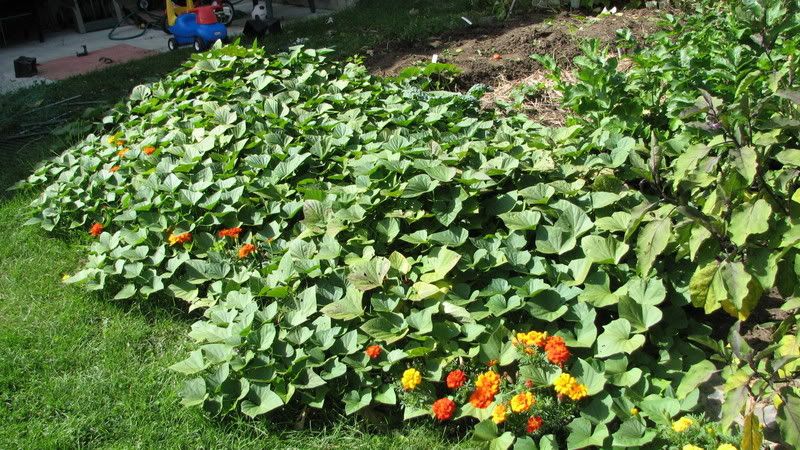
Photo Sharing and Video Hosting at Photobucket

7. Look at these beaties!

Photo Sharing and Video Hosting at Photobucket

8. I was really surprised by the size and number of them. Notice the latex dripping out of this one.
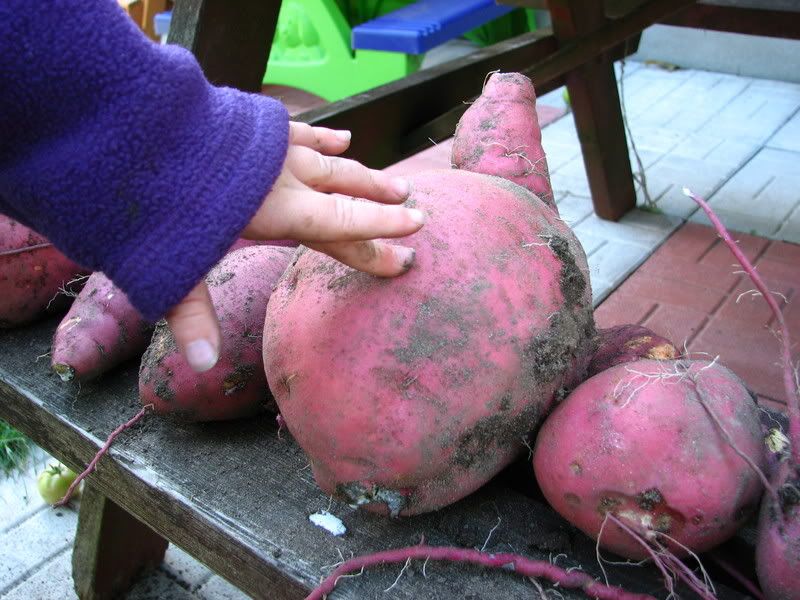
Photo Sharing and Video Hosting at Photobucket

9. This one wasn't so pretty but it was huge.
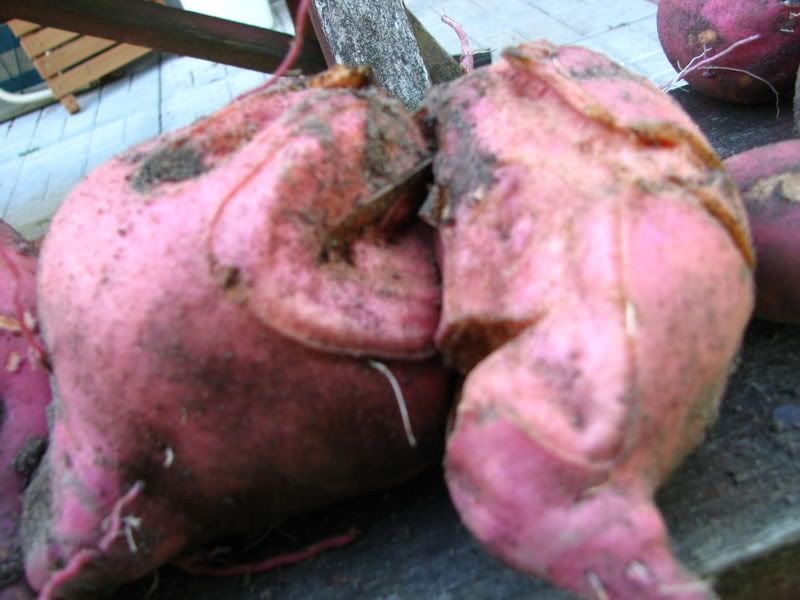
Photo Sharing and Video Hosting at Photobucket

10. There was some pitch fork damage so I had to cook those up for dinner tonight (or at least that's the story I'm sticking too). Yum!
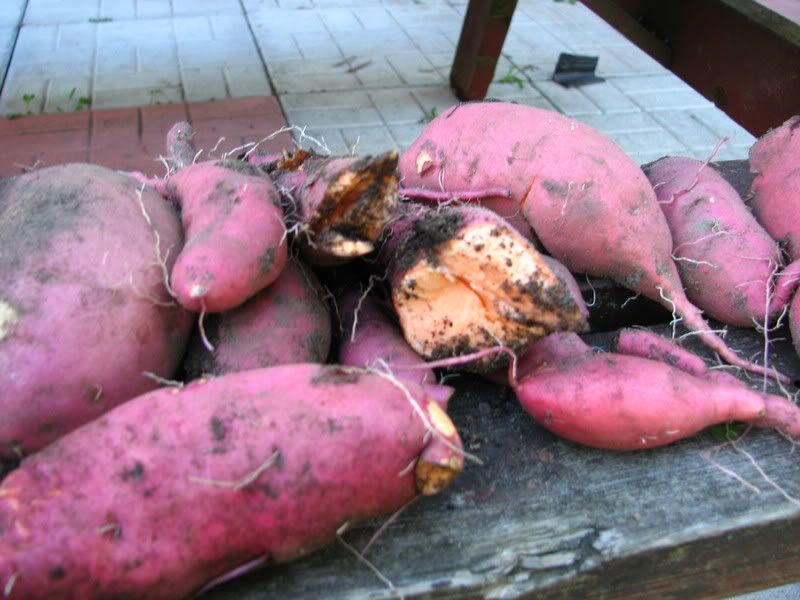
Photo Sharing and Video Hosting at Photobucket

Now I just have to make sure that I cure them properly. My husband thinks it's unreasonable to keep the house at 80 degree celcius for 5 days. I've taken to wrapping a tray in a winter blanket (with a air vent), in a plastic laundry bag, with a frequently heated water bottle in a warm room. Let's hope that'll be enough. I'll let you know.

Spend Sweet Potato Vine:
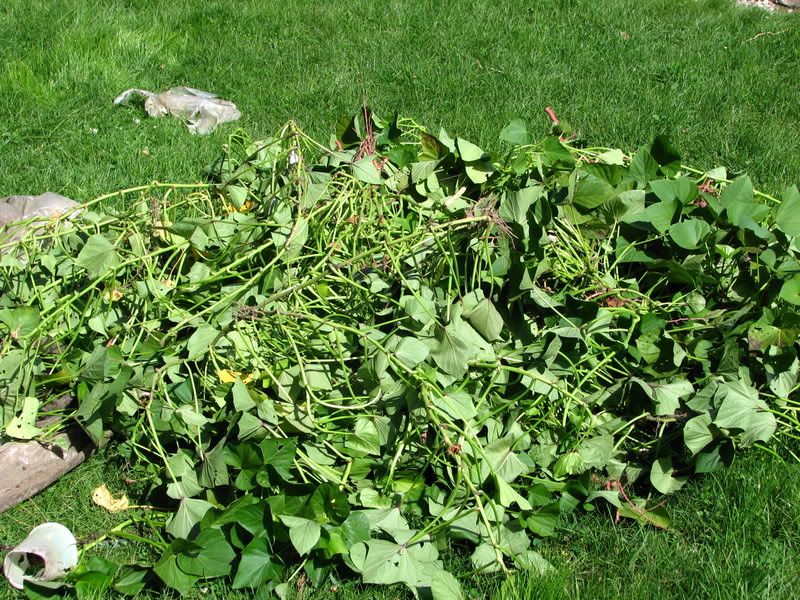
Photo Sharing and Video Hosting at Photobucket


Hortiphilia Fact

Sweet Potato Greens

According to Ken Allan's fabulous book on growing sweet potatoes, listed below, you can eat sweet potato greens though this will cut back on tuber production.


Heck, here's another one since it's been awhile.


Hortiphilia Fact

Make Sweet Potato Cuttings

Instead of composting your old vines, like me, take healthy cuttings from the tips of the vines and root them up in water (they may already have some roots on them if they were sprawling on the ground). Pot them up and plant them next year. This is a great idea for ornamental sweet potatoes too.


Links:

Sweet Potato book for northern growers
Mapple Farm: Supplier of Georgia Jet slips, and more.

Thursday, June 28, 2007

New potatoes - the intermission harvest

And now we'll have a short break in the normal growing season to pick some new potatoes.

Photo Sharing and Video Hosting at Photobucket
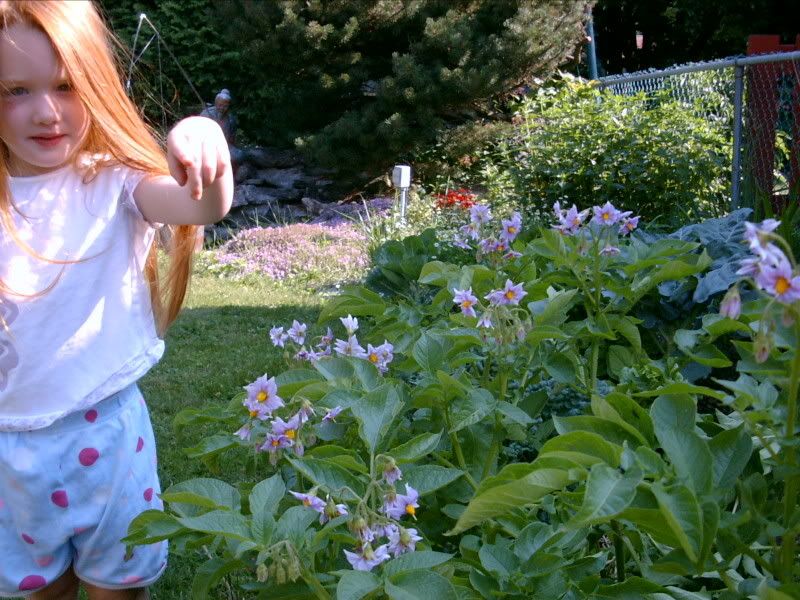
Potato plant in full flower beside my other assistant (she was complaining that her sister was hogging all the blogging limelight).

Potatoes plants normally start to form tubers, ie. potatoes, when they start to flower. You want to wait until they are well in flower before rooting around for the intermision crop. (Apparently, some varities will not flower or flower late so the above does not apply. The authorities that told me that said to wait about 65 days and then to check for new potatoes... I have no experience so good luck! I grew Carlton and they flowered just as expected, a lovely flush pink).

Another good tip, is that new potatoes are often ready at the same time as ripe peas. Many recipes call for using both. This will depend of course on your varities (use early varities for new potatoes), and climate and - insert usual gardening qualification*.

Hortiphilia Fact

New potatoes are immature potatoes that are harvested before the potato plant dies back, which is when you would harvest maincrop potatoes. They have a delicious flavour, delicate skin, and cannot be stored.


Harvesting New Potatoes

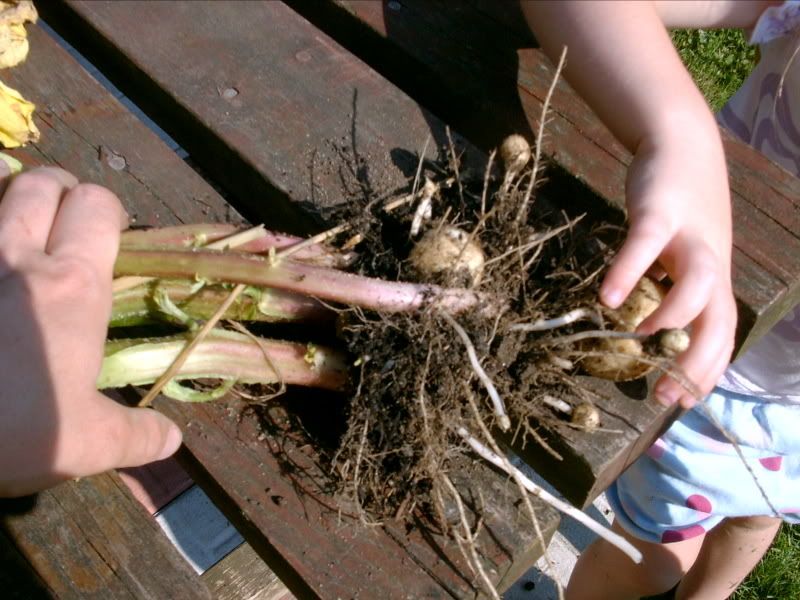
The best way is probably to plant your early season potatoes in mulch such as straw to make rooting around for the little guys as simple as lifting the straw. I like to do things the hard way so I just yank up several plants. This of course means that I sacrifice quantity later on.

Photo Sharing and Video Hosting at Photobucket
Potato plant with some good sized new potatoes and several very small potatoes still developing.

* Usual Gardening Qualification: Climate, Zone, Variety, Weather Fluctuations including rain, heat or growing index, Soil type and Quality, Pest Prevelance, Weeding Vigilance, Pet Damage, Forgetting to plant on time, Spilling beer on crop (not sure how this would affect it, we should do a trial), Children's Feet or Soccer Balls, How you speak to your plants, and so on.


Links:

Agriculural Pictures of a maincrop potato harvest

Fun site on growing potatoes

Tuesday, June 5, 2007

Bleeping Cutworms!!

** Warning: The following blog entry is full of aggravation and plant augish. Caution advised**

So I thought it was the bunny who has been nibbling this and that in the front but was puzzled why Ms. Fuzzytail didn't eat what she was tasting. Perhaps she realized that she didn't like onion afterall, or thought it would give Peter and the little ones indigestion? So I errected a fence.

Over the next couple weeks, one of my two onion* patches was decimated, most of my leeks were gone and there was nary a parsnip to be seen, nor a radish (I only plant these for show so I wasn't all that upset). I was puzzled.

Then I found a grayish fat grub chomping on an onion early in the morning. It dawned on me that I had heard of this menace before. The name crystalized in my head... cutworm.

Looking up the description confirmed it.


Hortiphilia Fact

Cutworms are the immature stage of several species of brown moth. They generally cut leaves or the entire plant off near the ground, leaving the victem lying beside the denuded stem. They are most commonly fat, dirty grey in colour and curl into a C shape when picked up.

I was overtaken with horror. What was the solution? I tried eggshells but the ants carted them off. Iwent to buy some Diamotaceous Earth but it read don't use on food. I thought of Bacillus Thuringiensis but didn't want to hurt any beneficials and other non targets. I stuck a stick in the ground beside the plant stem and they thanked me for the boost. Finally I wrapped the stems of my peppers (budding and fruiting!) in aluminium foil. So far, so good.

I also discovered that if you scratch the ground near by the latest casulty, the bleeping thing is very close by snoozing a way. It then goes to sleep with the fishes in my pond...

Normally, I am a live and let live kinda gardener but come on, I have only seven parsnip seedling left! Apparently you can also lay boards near where they are feeding. They will hide underneath and you can surprise them in the morning with your pail of soapy water (for tossing them in). I have heard people also have success with rings of cornmeal, eggshell or other scratchy stuff.

The best technique though is seclusion. Keep your plants away from them! They are often found in new garden beds where there was once sod but not exclusively. What do I mean?

Procedure for collaring plants:

1. Take something flexible that you can make a 3 inch collar out of like aluminum, toilet paper roll, plastic, whatever.
2. Place around stem while planting, 1 inch below the soil, 2 inches above.
3. For large areas, try garden edger.

You can also culivate shallowly in the spring and let the birds make a meal of them before planting.

Soon, I'll show you my seed starting setup to replant the devastated area.

* They arem't supposed to like onions... mine aren't so picky.
** Where are the pictures? My nifty camera is out for repairs so no closeups possible.

Links

Managing Cutworms
Controlling Cutworms

Wednesday, May 16, 2007

Frost Watch 2007 - Day 2

They survived the night under the thin pathetic plastic I provided them but it was not cold. Today, I switched to the heavy vapour barrier plastic.

Photo Sharing and Video Hosting at Photobucket

Today, a low of 2-3 C is expected with a windchill making that feel like a much more nippy -2C.

That's right my friends (and tomatoes), below 0.

A little lesson on frost:


Hortiphilia Fact

Four (degrees celcius) or less
(Frost tender) plants become a mess!


Few know (myself included until recently) that temperature is measured from about a height of 5 feet. As cold air sinks, the temperature at ground level can be much colder than that, like 0 degrees. Frost happens when the temperature is freezing - shock and surprise - so a measurement of 3 or 4 degrees, though above 0, may still mean frost for your plants.

Other factors that affect whether or not there will be a frost is how still the air is. A breeze, can keep the air circulating so that cold air doesn't have time to settle out.

4 degrees predicted? Will there be frost?

1. Cloudy weather: less chance.
2. Clear skies: more chance.
3. Rain: Less chance.
4. Snow: Draw your own conclusions.
5. Stiff breeze: Less chance.
6. Raised beds: Less chance.
7. Dry air: more chance
8. Cold air barrier: more chance
9. Moist packed soil: less chance
10. Loose (recently cultivated), dry soil: more chance


When in doubt, don't put it out.

or...

If it's in bed, cover its head.

How to protect plants

The sad truth, from my research, seems to be that most row covers / hot caps / polytunnels and the like only give about 2-4 degrees of frost protection. However, that can be quite significant if you are expecting a nightime temp of around 3 degrees. It could mean the difference between plant death and plant dismay.

You can use pretty much anything to cover plants in a pinch such as an overturned pot, cardboard box, old towel, blanket, an impromptu coldframe constructed out of hay barrels or other supports and some sort of light such as an old storm window or plastic sheeting.

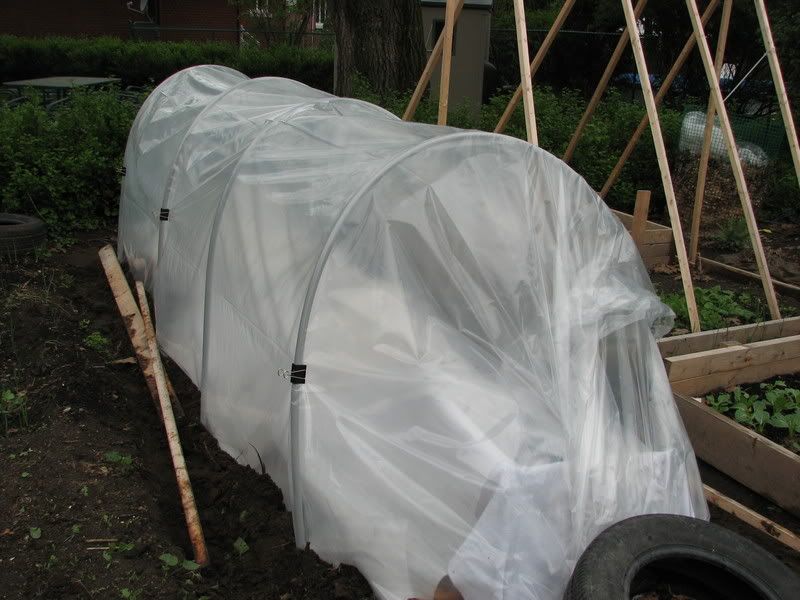
You can also use more classic products such as a hot cap, or polytunnel, but apply these before dusk as much of the frost protection comes from the microclimate created inside. Heat is stored by pots, the ground etc... inside the polytunnel and then radiated back out at night.

Caution: Make sure your plants don't overheat which is easier than you may think in a polytunnel on a warm day. Raise the sides, open the ends, otherwise ventilate.

Floating row cover is also an option but again it only gives you a couple of degrees of frost protection. It will be more affective if it doesn't actually touch the plants. This can be accomplished by hoops such as the polytunnel or by jabbing sticks into the ground so that the floating cover tents out above the plant. Primarily, the advantage of row covers is to provide a protected environment to speed along the growth of young plants or to keep out pests.

Stay tuned for more on whether the plants will weather the weather.

Each day they live, I will find another exciting frost fact to post.

Links:

Great discussion on frost - aimed at strawberry growers but very useful to all.
Discussion on polytunnels - by a manufacturer

Monday, May 7, 2007

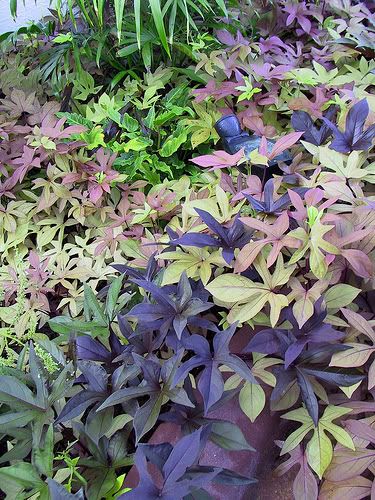
Foliage - the new flower

Photo Sharing and Video Hosting at Photobucket
Ornamental Sweet Potato Vine. Permission for use through Creative Commons. Photo by Tiglio Art's

In a perrenial bed, you might try to have something flowering at all times and certainly at the height of summer, it is hard not to get a display. However, at other times, you may have a solid mass of green with only a bloom here or there to break it up.

There are various strategies for coping with this including incorporating plants with strong structural shapes.

You can also look for plants with interesting and contrasting foliage. So even when there is no flower, there is still colour. Leaves don't just come in green. They can be steel-blue, grey, lime, pink, purple, peach, white, yellow, red, tan, orange, almost black and mixtures of the above.

Thankfully many classic foliage plants are also shade lovers, a place not conducive to heavy flowering:

1. hosta
2. coleus
3. coral bells

Photo Sharing and Video Hosting at Photobucket
Coleus. Shared through Creative Commons. Photo by jam343

Coleus = Colour

Don't just think of Coleus blumei, otherwise known as the painted or flame nettle, as a plant that you buy from the nursery every spring to pop into your planter box. It is extremely easy to root and overwinters happily indoors. If you know someone with a coleus you envy, ask for a cutting and stick it in a glass of water. You too will have that plant before you know it. As winter approaches, either dig up the plant or take cuttings for next year.

Oh and though traditionally it is known as a shade plant (colour fading in the sun), some are supposed to be tolerant of heat. I have never tried them so I don't know and there is no shortage of plants that look great in full sun.


Hortiphilia Fact:

Coleus is a 'tender perennial' BUT if it sets seeds, it soon expires.

How sweet is the Sweet Potato Vine

If the spot you need to jazz up is sunnier, you'll be happy to hear that the purple colour in plants is their version of a tan so it deepens in the sun. Many, many plants have darker versions, but the one I would like to focus on is the sweet potato vine, otherwise known as Impomoea batatas

It comes in a host of colours from chatruese to cerise to bruise purple. The local nursery has an agricultural sized table of varieties. And like the coleus, sweet potato vine can be 'easily' rooted from cutting and overwintered.

That's what I might try and do with this little surprise.

Photo Sharing and Video Hosting at Photobucket
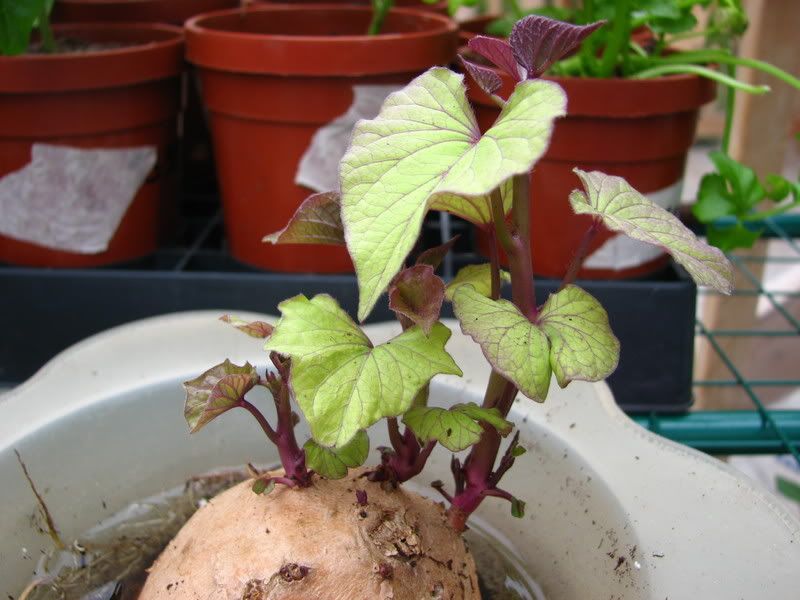
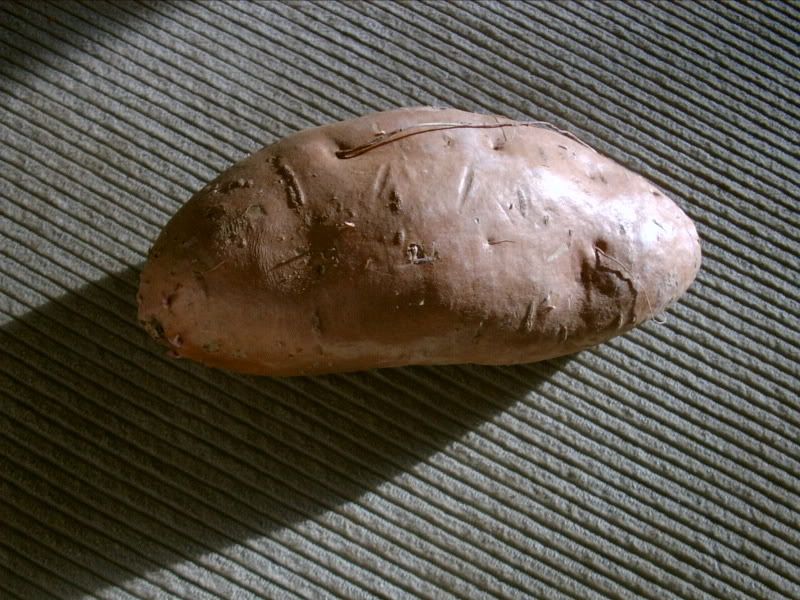
Sweet potato sprouts

I noticed some sprouts on my sweet potato so decided to let it grow, figuring that it would be some dull shade of the aforementioned standard 'cholorphyll' green when what before my wondering eyes did appear but variated purple and lime green. So perhaps it's just this colour because it's stressed and maybe it will revert to regular green later, but maybe not!

Links:

All about coleus by wikipedia
overwintering and propogating ornamental sweet potato vine by tuber
Annual or Perennial? That is the question
Grow a Coleus Standard - wild!

Thursday, April 26, 2007

Potatoes have arrived, greensprouting

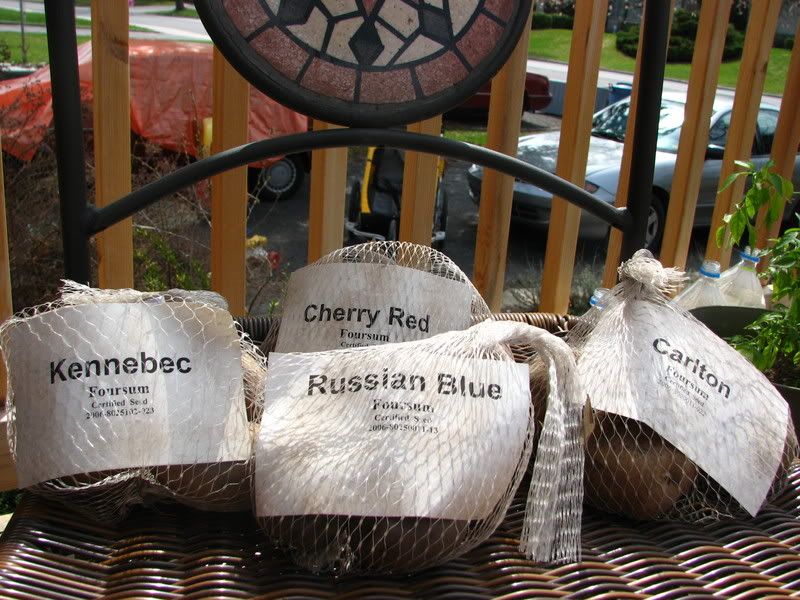
Eagle Creek Potatoes has shipped me my order.

Photo Sharing and Video Hosting at Photobucket

They offer foursums which are, as you might guess, packs of four potatoes of a single variety. You can get many of these foursums, four being the initial suggestion, thereby increasing the fun in your potato patch. Other than the russian blues, all the seed potatoes were large enough to cut up if I wanted to but I never do that.

As per the instructions on the helpful information sheet that accompanied my order, I am green sprouting:


Hortiphilia Fact:

Green sprouting potatoes is to leave seed potatoes in a cool (10-15 degrees Celcius) and bright place (such as a sunny window) to develop sprouts. Also known as chitting*.

They then suggest to plant when the soil is about the same temperature as the seed potato. This pre-growing is supposed to increase the strength of the plant and eventual yield. We shall see.

Normally, I just stick whole seed potatoes in the ground, give them a salute, and say, "good luck". I don't fertilize though my soil is frequently ammended with various organic matter, and I rarely manage to hill up as often as I should. However, I have had good luck with potatoes and hope to continue to do so. From the myriad ways that are suggested to grow potatoes, I suspect that they are hardy souls. So if you aren't going for a record in size, earliest maturity, or highest yield, you could probably grow them any which way.

I have only two potato growing tips:

1. Acid soil prevents scab so consider incorporating something acidic like oak leaves into the soil the year before.

2. The colorado potato beetle has a thing for physalias (chinese lanterns) in our garden and doesn't bother anything else. Try it as a trap crop. And let me know if it works for you too.

Okay, three - if you want to cheat and dig up little tasties, mulching is a good idea. Then you don't have to go gingerly digging in the soil, you just have to move back the mulch to search for those delicious new potatoes.

* Chitting? This is a term used to describe any pre-sprouting technique in seeds or tubers except for sweet potatoes where they seem to use the term slip production.

Links:

Heritage potato varities
Potatoes under straw
Potatoes in hills - agricultural scale of hilling up potatoes
Potatoes in tires

---
A series of little posts to catch up. My other half has been monopolizing the computer because of work or some other similar excuse!

Tuesday, April 10, 2007

Brassica Babies, Bad Weather and Pop Bottle Cloches

In a good year, frosts are mild by mid to late April, and with minimal protection, my brassicas do just fine. This is not a good year.


Hortiphilia Fact


Buttoning or the formation of a small head in broccoli, cauliflower and other brassicas can be caused by excessively cool temperatures when plants are young. (under 45 F / 7 C)


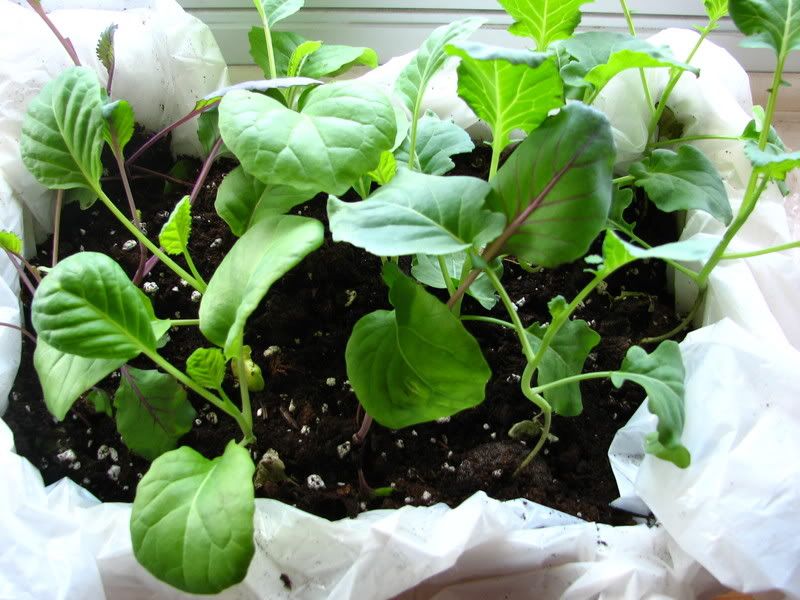
It is cold right now, going well below freezing at night. But my brassica babies are in need of a little leg room and a lot more light:

Photo Sharing and Video Hosting at Photobucket
Cabbage and broccoli seedlings 6 weeks old

So even though I know that the dreaded 'buttoning' might occur, I have put them out but not without a little protection:

Photo Sharing and Video Hosting at Photobucket
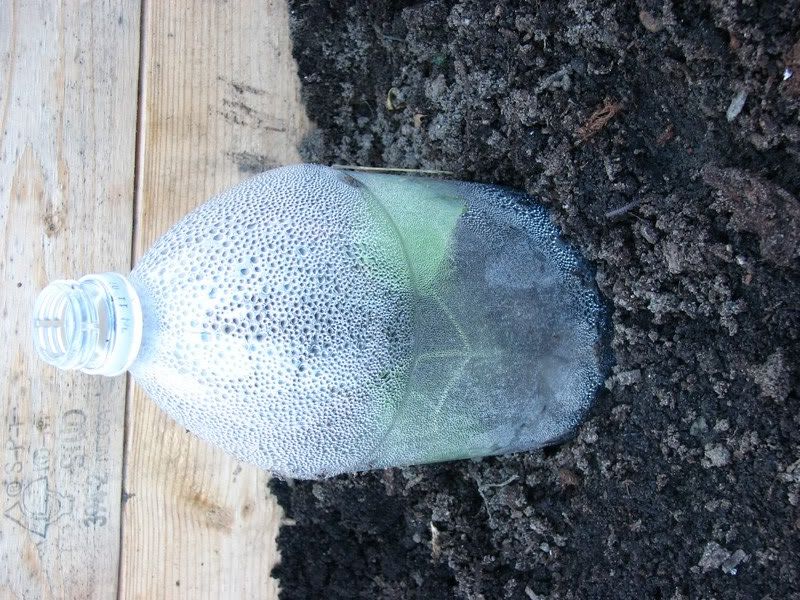
Broccoli seedling inside of pop bottle cloche inside of cold frame.

Meet the pop bottle cloche. Simple to manufacture. To give you instructions would be insulting but just in case you are really not with it right now, here are the bottoms:

Photo Sharing and Video Hosting at Photobucket
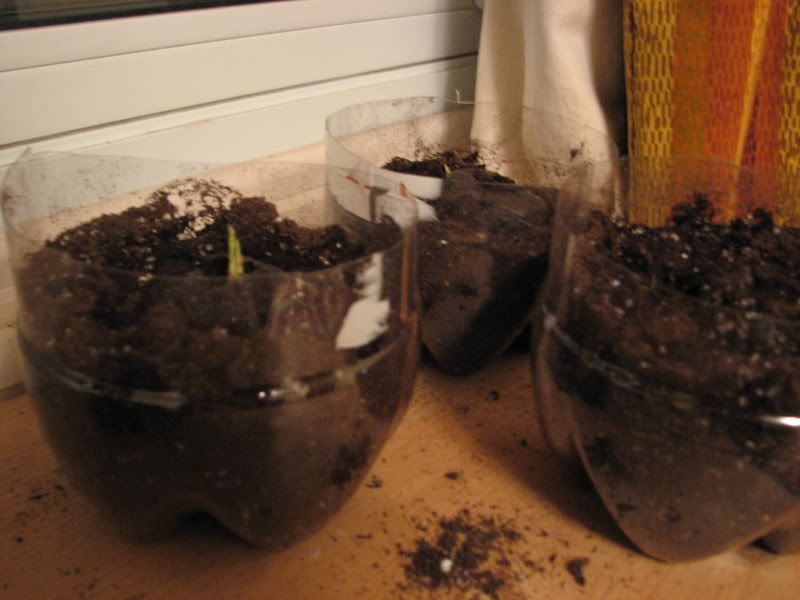
Chufa nuts, just sprouted planted in pop bottle bottoms

From that, I imagine, you can deduce the rest.

"Hello in there broccoli."

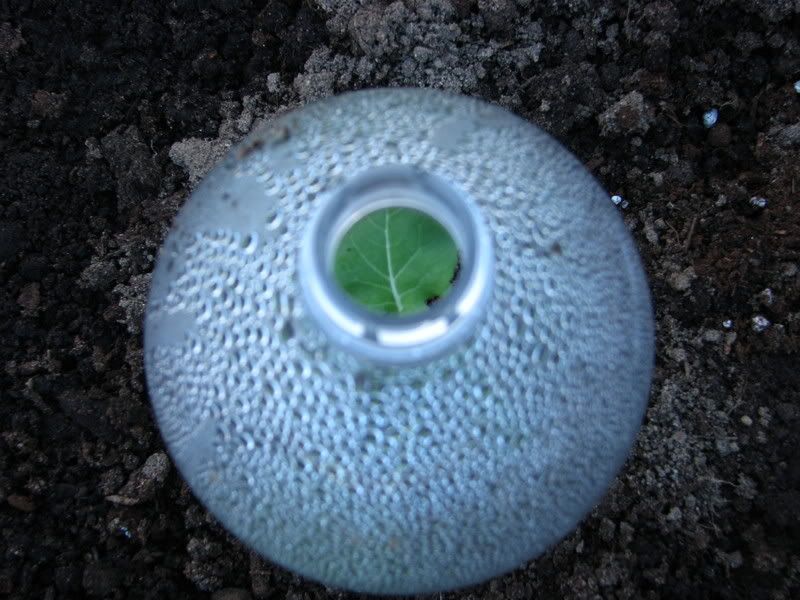
Photo Sharing and Video Hosting at Photobucket
I spy broccoli with my little eye

These pop bottle cloches are inside of a cold frame. This may not preven the dreaded
premature head but it's worth a try. In the meantime, I have started a new batch of broccoli that will not be put out until the magic number 7 (degrees Celcius) is held most of the time.

Links:

A random how to grow broccoli page

More buttoning details

Interesting historical pictures of season / climate extension

You Grow Girl was much more creative with her pop bottle cloches - I love the protective ring idea.
Janet's Garden - some good ideas are like rocks in the road, hard not to trip over (the comment was directed at myself). Another great use of the pop bottle cloche
Soda bottle cloche
Playing in the dirt - another convert

I wonder how many other frugal gardeners out there re-invented this weather moderator?

Sunday, March 18, 2007

Forced Fruit Twigs
Green Thumb Sunday

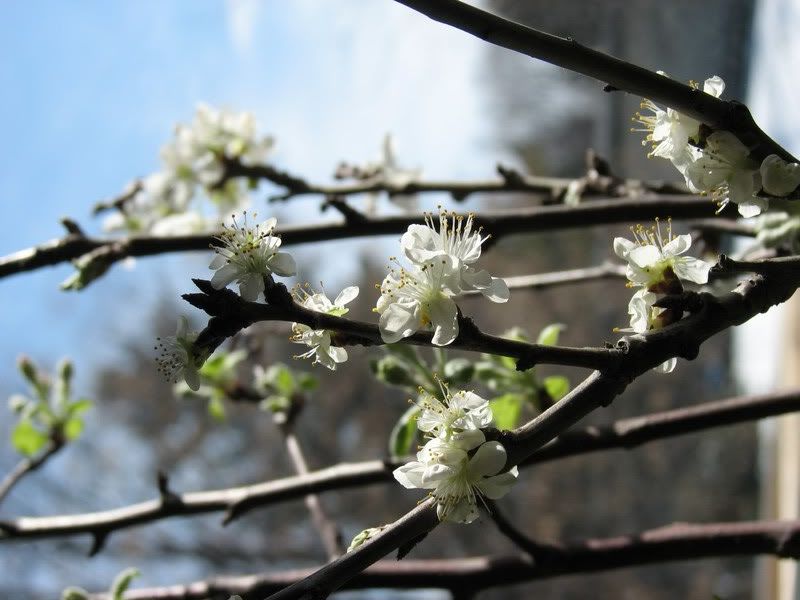
What to do with those twigs after you prune your fruit trees:

Photo Sharing and Video Hosting at Photobucket
Forced plum tree twigs

1. Give 'em to your friends to graft on to their trees
2. Use the ones that aren't diseased for the bottom of a compost pile
3. Force them for early indoor blooms.


Hortiphilia Fact
Forcing means to trick bulbs or twigs into flowering.

I just stick mine in water and wait patiently. This is from my 'indoor garden.'

Links:

Basic Grafting Techniques
More techniques on grafting
Forcing twigs

Join Green Thumb Sunday
Join


Gardeners, Plant and Nature lovers can join in every Sunday, visit As the Garden Grows for more information.

Saturday, February 3, 2007

Radicchio is perrenial - take two

Late last night, I was overcome by the desire to again tackle the untangling of chicory names in order to determine just which ones exactly are perrenial. Well, I think I may have cracked it (feel free to disagree). In fact, I feel so confident, I am going to write it as a fact.

Hortiphilia Fact:

For gardeners the chicory family is broken into two sections
Endives which are annual/biennual &
Chicories, which includes radicchio which are perrenial


Your really that sure? It turns out that I needed to look into the latin. To repeat the above in scientific sounding terms: The chicory relatives that we commonly consume in our salads are broken into two names:


  1. Cichorium endivia - endive, escarole types
  2. Cichorium intybus - radicchio, sugarloaf, root chicory and forcing chicory otherwise known as belgian endive/witoof, cutting chicory, italian dandelion, asparagus chicory, others known as 'chicory'

So if you want to try and make a perrenial bed of chicories, then you would choose from the second category. I have yet to research how well the 'endivia' group self-seeds.


By the way, I did read on a seed company webpage that they suggest reseeding radicchio every year for better quality (or more sales?). We shall see.

Once again, stay tuned to see how my chicory bed turns out...


Go to Radicchio is Perrenial? - take one


Links (only the most succinct of the webpages I was dredging...)

http://www.floridata.com/ref/c/cich_end.cfm

http://www.floridata.com/ref/C/cich_int.cfm


Thursday, February 1, 2007

Leaf Mold-ing away

Photobucket - Video and Image Hosting

I hate to admit that this is a 'some people' story.

Anyhow, it occurred to me an embarrassingly short time ago that it was silly to send off my compostable leaves with the yard leaf truck every fall. Instead, I should make leaf mold with them, or use them as brown matter in my compost pile. On my perrenial beds, I just leave them there. They are especially good for woodland style gardens.

Hortiphilia Fact:

Leaf Mold is made by letting tree leaves (usually deciduous) breakdown
It is a great soil conditioner, and mulch
,


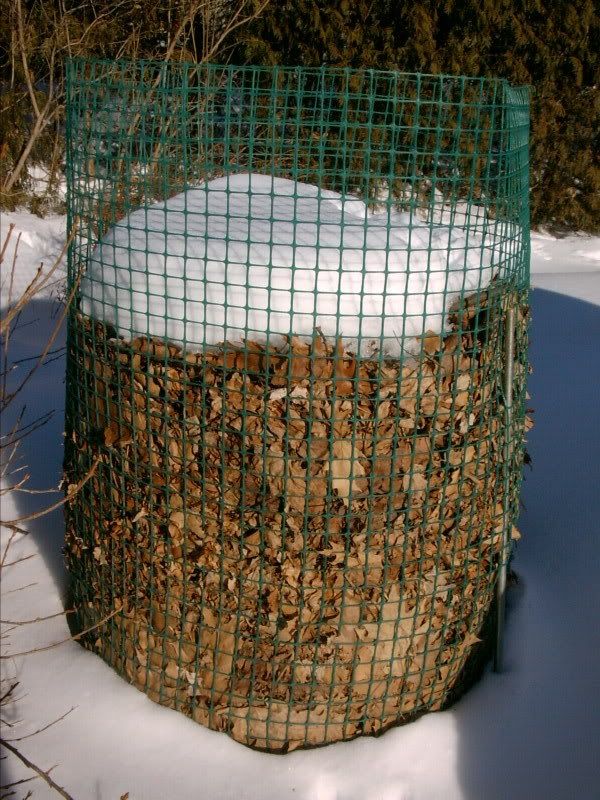
How do you do it? Unlike other forms of composting, this is really really easy. Just pile them up. You don't have to pile them up to make leaf mold but it is more convinient to keep them in one spot. Some suggest that you should turn this occasionally. You can build a cage for them, like the one in the picture. It is plastic trellis held in place with rebar. Also unlike regular compost, you don't need to worry about making sure it is loose and airy. You can squish the leaves as much as you like, and the container can handle, to get more in. It may take several years for the leaves to break down but the wait is worth it.

But what about the 'some people' story. My neighbour who thinks I'm a crazy gardener noticed me stuffing oak leaves this fall into the above contraption. He asked me what I was up to. I told him enthusiastically that I was making leaf mold to add to the soil.

He said, 'Won't that make it too acidic?'

I said, still happily, 'Well the blueberries won't mind.'

'But people are allergic to mold.'

Incredulously, 'Some people are allergic to leaf mold?'

'Everyone is.'

Uh-huh. Yup. Some people are just easily freaked out. He was probably wondering why I had to be all organic and not just put my leaves out like the rest of them. Some people.

Anyhow, if you can walk through a deciduous forest in early spring, your not allergic. I'm okay.


Links:

Thursday, January 25, 2007

Short Season Sweet Potatoes

Photobucket - Video and Image Hosting


Optimistic Gardener Warning

I plan on growing sweet potatoes. Before you point out my truncated growing season, look what I found out:

Hortiphilia Fact:

There are short season sweet potatoes
Most popular is Georgia Jet, between 90-100 days

I became interested in these beauties because they like thin, well drained soil, are drought resistant, and store well at room temperature. They are also highly nutrious and oh so tasty. I found reference to them in an old gardening book (currently on loan so I can't remember the name) about the Ottawa Valley where she says she tries to grow them every year not always successfully but usually has immature tubers to eat which are very tasty. Hunting down the possibilities of season extension, I came across Ken Allan - northern sweet potato guru.

After a year of humming and hawing, I decided that I must try and grow these too. So I have ordered his book and several slips of Georgia Jet.

His article on clear plastic soil warming has me optimistic about melons too.

If this has peaked your interest enough to try it, or if you are succesfully growing sweets in the north, let me know.

Links:

Greg Wingate at Mapple Farm supplies short season sweet potatoes and other uncommon veggies, as well as Ken Allan's book:
http://www.cog.ca/documents/Howsweetitis.pdf

Ken Allan's page about his short season sweet potato book
http://home.cogeco.ca/~allan/sweet_potatoes_flyer.html

Ken Allan also sells sweet potato tubers:
http://home.cogeco.ca/~allan/sweet_potatoes.html

Overwintering Parsnips

You may notice that I have a thing for overwintering and perpetual beds of vegetables. I know that normally it is only the westcoast gardeners and others in warmer climes that are all dizzy about keeping a vegetable alive so that it starts fresh and early in the spring. Maybe I'm jealous. Maybe I wish that my skin didn't feel lethaly threatened when I walked into a -30C windchill this afternoon. Maybe, but that's neither here nor there. -30C windchills are challenges just like 4 feet of accumulated snow, and percipituous killing frosts late in spring.

Back on topic - Overwintering parsnips.

Hortiphilia Fact:

You can overwinter parsnips!
Cold turns starch to sugar so spring dug parsnips are sweeter.

At least, it seems that most people can overwinter them even in zone 2/3. I read in the gardenweb forum of some really far north gardners who have self seeding beds of this divine root crop and I thought, is this possible for me? When would they flower. Would the seed grow fast enough to produce decent sized parsnips for harvest in the fall, or only in the spring. Would I be selecting for smaller parsnips? How many parsnips would I need to keep up sufficient variability in the genetic line? Will the garden plot get riddled with disease because it wasn't rotated? Questions, questions.

I think I stumbled across the answer of 6 parsnips as adequate genetic stock. I believe the source was Breed Your Own Vegetable Varities by Carol Deppe. However, I have to verify that.

Could I keep 6 parnsips aside for seeding reasons. Of course! Perhaps, an experiment is warranted... I feel an optimistic gardener warning coming on...

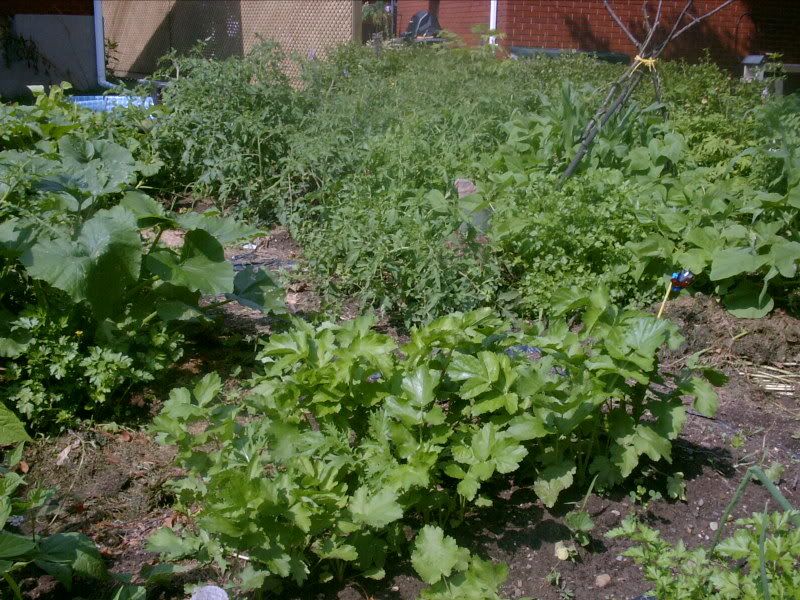
Parsnips in the foreground, mid-summer
Photobucket - Video and Image Hosting

Extra, extra, read all about it (or general info):

  1. Plant parsnips as soon as the ground can be worked
  2. Soil must be loose and without stones. A cheat way to plant is to take a crowbar and make a conical hole, fill with a mixture of peat moss and sand, or some other sifted light material.
  3. Parsnip seeds germinate poorly so always use fresh seed. It also germinates slowly so many people suggest marking the row or block with radish seeds.
  4. They taste better after a couple of heavy frosts as the starches are converted to sugars.
  5. You can store them in the ground over winter. I've never heard of someone mulching them first but I don't think it would hurt. Harvest as long as the ground is diggable and then first thing in the spring.
  6. You can store them in a root cellar as well.
  7. They are really tasty roasted, or in stews. We make root veggie pie out of them!

Monday, January 22, 2007

Overwintering Peppers

After reading that:


Hortiphilia Fact
Peppers are perrenials

At least hot peppers are.

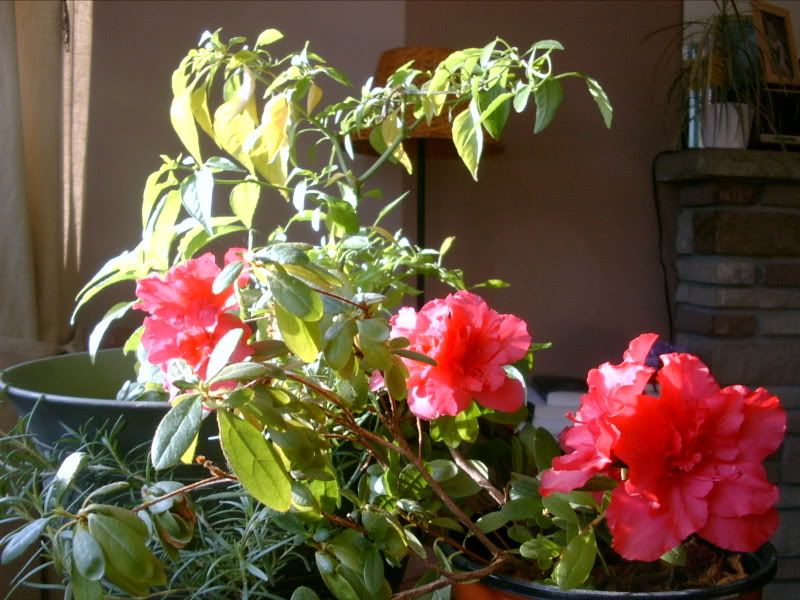
I wondered if you could keep them alive for a second growing season. Food producing plants that self seed, overwinter, or are perrenial makes me giddy! So I did some research and found that many people were keeping their hot peppers, and eggplants(? - more reseach to follow) alive to grow another season. So I brought in one of my potted babies. Here it is, a long cayenne, behind the azalea in beautiful bloom.

Photobucket - Video and Image Hosting

When I first brought it in, it experienced leaf drop but then started to grow a bunch of new leaves, and flowers. I have been dutifully picking them off so it saves its energy for another season. Hopefully, as according to, Pepper Joe they will produce an early crop next year!

Go to Part Two - A Pepper by Any Other Name...

Sites:

http://www.gardenerscorner.org/subject073929.htm
http://www.rocoto.com/overwinter.html
http://www.gardensalive.com/article.asp?ai=641&bhcd2=1169352244