Tuesday, December 18, 2007

Where are you coldframe?

This picture goes out to Gardinista (blog worth a visit - north of north gardening), who had the audacity to claim that Ottawa did not have serious winters!!

Photo Sharing and Video Hosting at Photobucket
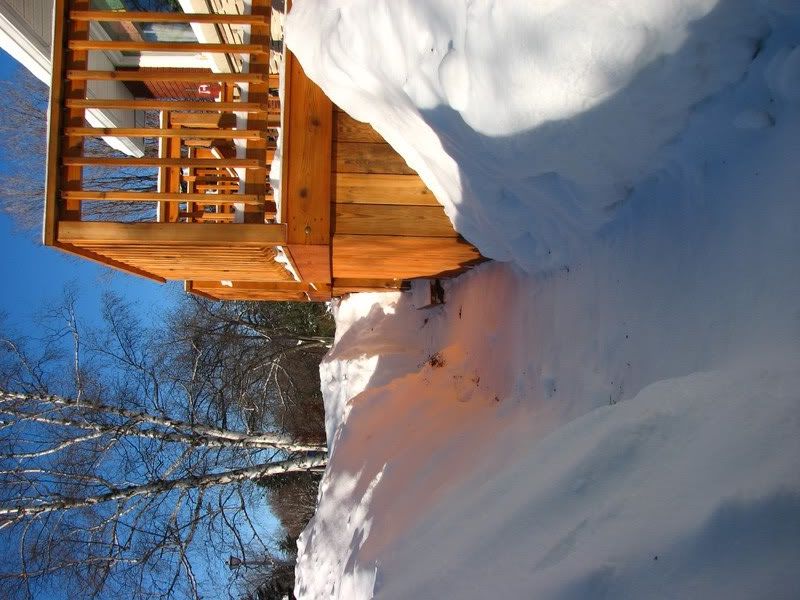
The path we dug out for the post man.

Here is the path to the coldframes... By the way, the snow is at about 3 ft!!!! - insert appropriate unhappy sound as you imagine yourself over knee deep in snow as you go to empty your compost.
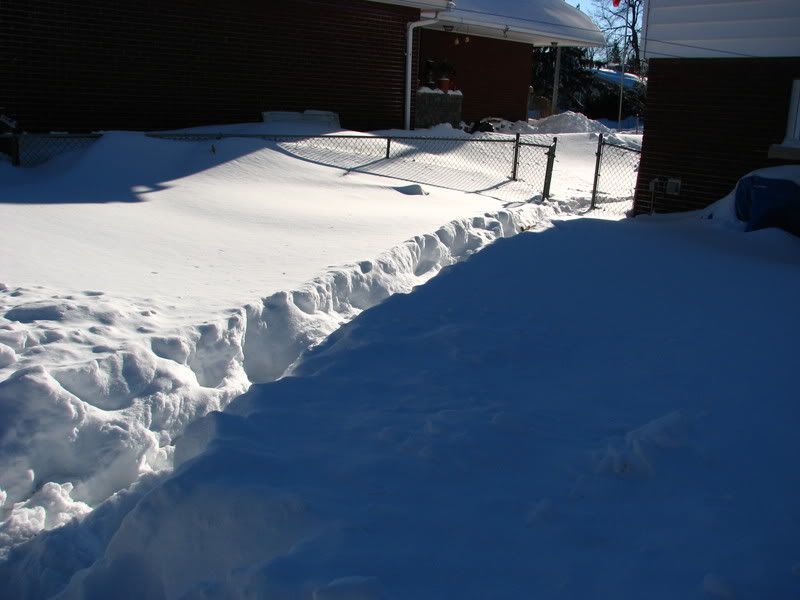
Photo Sharing and Video Hosting at Photobucket
To all you people that wanted a white christmas, enough already!

Note that you have to dig down to get to the snowframe... I mean coldframe.
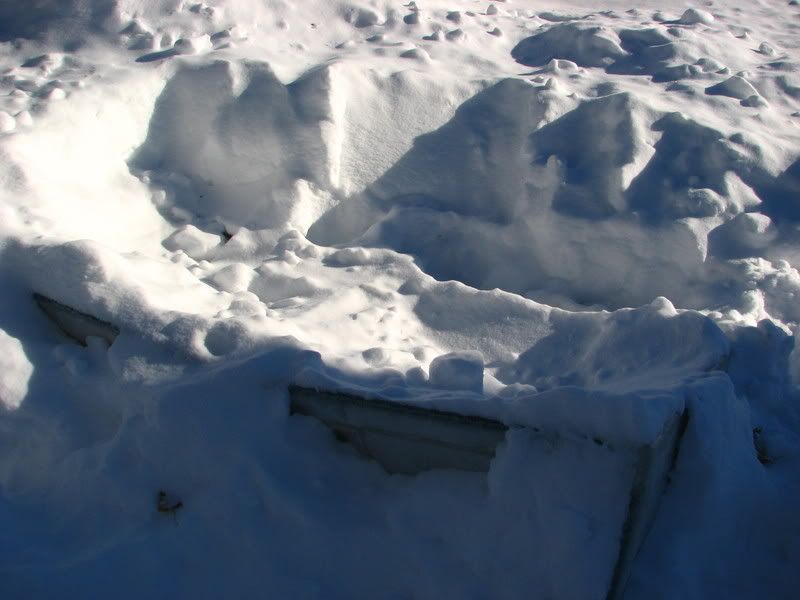
Photo Sharing and Video Hosting at Photobucket
I hate to see how high the snow cliffs will climb by the end of the season around this 2ft. coldframe.

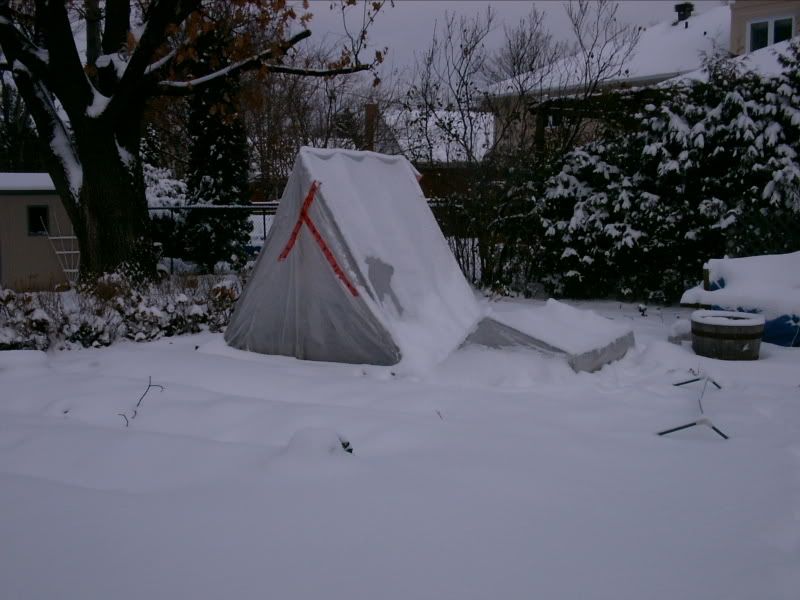
I punctured the plastic peaked polytunnel thingy, normally known as the spaceship, around here. Reason to make sure that you didn't bring the metal tipped snow shovel with you! Taping was not an option as it is too cold for the glue to stick so I stuffed plastic bags in the rips which seems to have solved the problem for now.
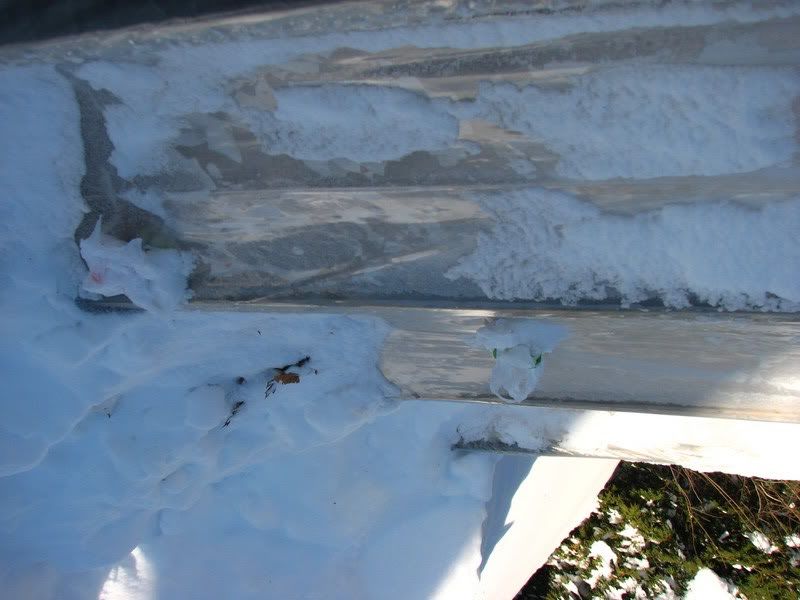
Photo Sharing and Video Hosting at Photobucket
You might be able to make out the white plastic bags from the snow.

But I know you are wondering is there really anything green and unfrozen in there?

Ummm... sort of?
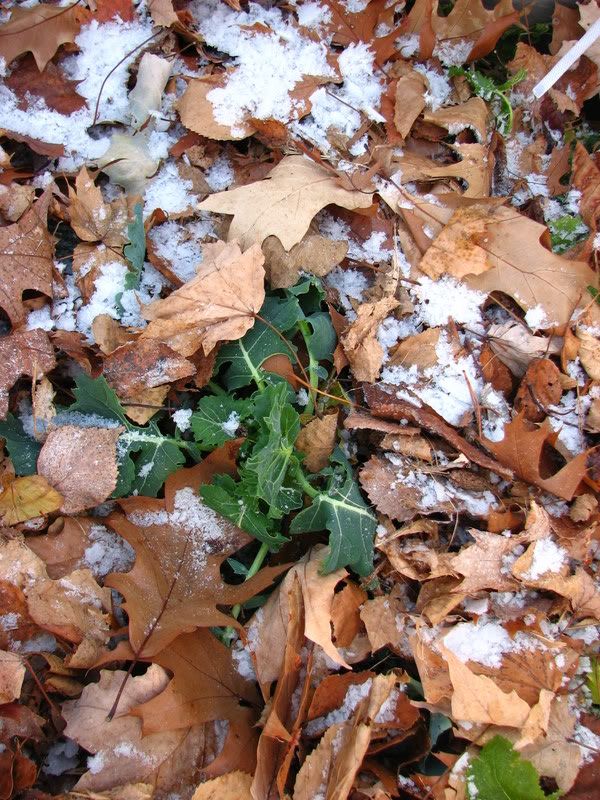
Photo Sharing and Video Hosting at Photobucket
Packed with 2inches of leaves (not enough)

The Kholrabi leaves weren't entirely frozen. In fact, they felt quite healthy and leathery yesterday so today I harvested it for you - A big old hunk of ice.
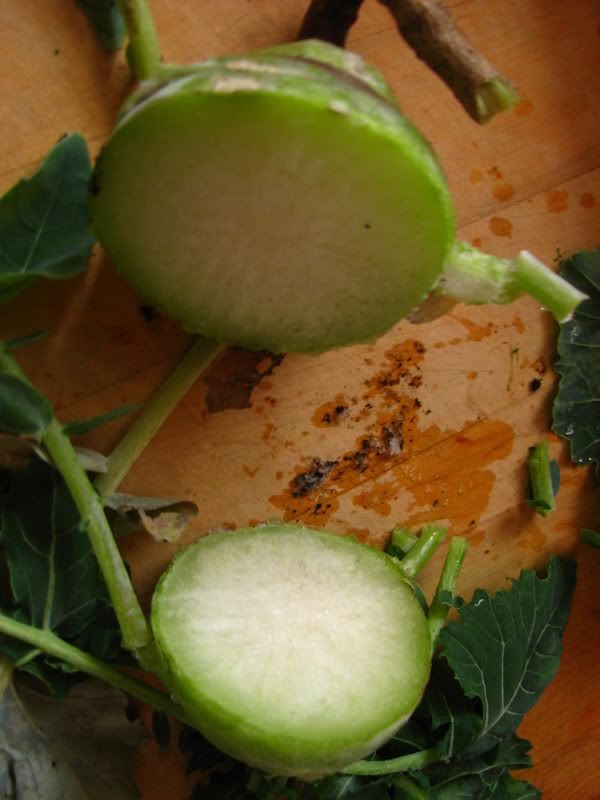
Photo Sharing and Video Hosting at Photobucket
Would you like some Kholrabi cubes with that drink?

Leaves in pretty good condition, swollen stem, frozen. It did not taste too bad though. When I de-thawed it in hot water, it had the texture of frozen carrots. I would throw it in a soup or stew.

The frost seemed to come from the ground which is a problem I have been having with my season extension project and is why I have a new project: the ground insulated polytunnel.

Tuesday, December 11, 2007

Storage Veggies - celariac

Photo Sharing and Video Hosting at Photobucket

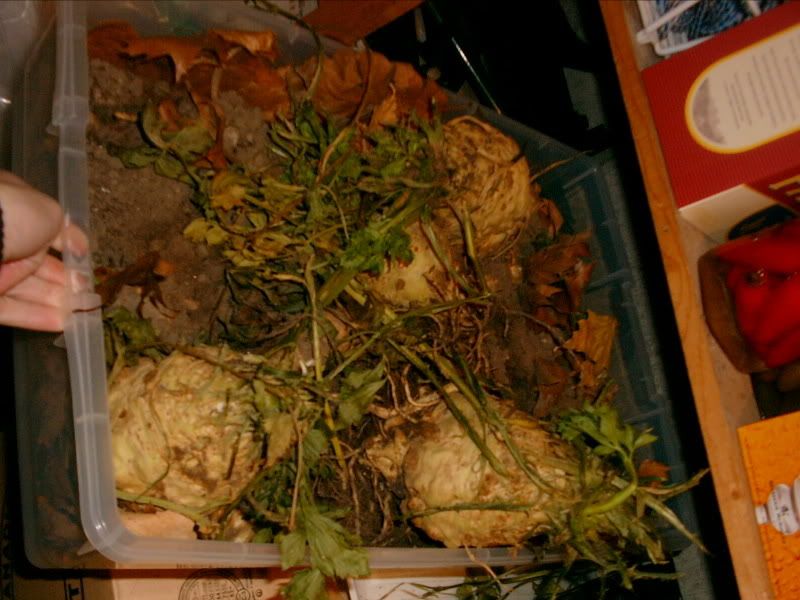
This odd vegetable is called celariac and is as the name suggests related to celery. It has a swollen stem which stores well into the winter, or so I'm told. This is the first year I try it and right now it is piled in the same box with the parsnips that survived the wrath of the cutworm. I had intended on brining in a box of turnips and carrots too but the ground froze quickly and I wasn't able to fully pack down my 'leaf frame' (think cold frame with leaves) in time. Anyhow, they should overwinter for food in the spring. The same lack of time this year meant I hastily stored my roots in plain old garden soil which you aren't supposed to do but it has worked for me every single time I've tried this technique.

My experiment so far:
In storage

Sweet Potatoes (cool, not cold after curing) - keeping well
Celariac (cold room, above freezing) - keeping well
Parnips (cold room, above freezing) - keeping well
Jeruselum Artichokes (experimental storage in soil in cold room) - keeping well
Squash (dry, room temperature) - keeping well
Tomatillos (dry, room temperature in husks) - keeping well
Tomatoes, winterkeeper (dry, room temperature) - a little whizened but still good
Potatoes - We ate most of them...
Onions - gone, must grow more
Garlic (dry, room temperature) - keeping well
Kale (outside getting chilly) - still tasty in soup
Dried beans and peas (dry, cool) - excellent
Turnips and carrots - in frozen ground but usually fine
Cabbage (fridge) - excellent
Beets - last I checked some were in good condition - the leaves were not frozen - in my spaceship (hoophouse thingy)

I'll keep you updated.

Thursday, December 6, 2007

Hey what's with the long period between posts?

I admit it. I've been cheating. I have another blog. But I still love gardening. Really. It's just not very inspiring now under two feet of snow. And well, the other blog is so new and exciting and why don't I just introduce you:

Left School

Yes, it's a homeschool blog but not just any. No, it's secular and lefty and new! So if you have no interest whatsoever in checking out this other subject matter, fear not. I will be plant crazy before long.

Sunday, November 25, 2007

Ottawa Welcomes Winter.

Photo Sharing and Video Hosting at Photobucket

My mother has moved to Gabriola Island off the coast of Vancouver Island's sheltered gulf side. I'm sure when she sees this, she will still feel the shiver of Ontario winter down her back but then she'll look out her window to the dew sparkled evergreens and know that in February there will be daffodiles.

And she will tell me about them.

I know she will.

It's a tradition in our family. Retire. Live in BC. Call the children buried under snow to ask if their bulbs are up yet. No? Oh right, you live in winterland.

Welcome to winterland fellow bloggers.

Monday, November 19, 2007

Harvested my Jeruselum Artichokes

We've had some hard frosts now so I've started digging out the root crops that I plan on using or storing in ernest now.

Up came the parsnips, some turnips to the chagrin of my hubby, carrots and beets. Most of these I leave in the ground under a coldframe and mulch. Carrots, at any rate, overwinter here without any significant protection, just a pile of leaves. The disadvantage is that you can't dig them up when there is three feet of frozen dirt.

I also yanked my celariac (a subject for another post) and my Jerusalum Artichokes:

Photo Sharing and Video Hosting at Photobucket
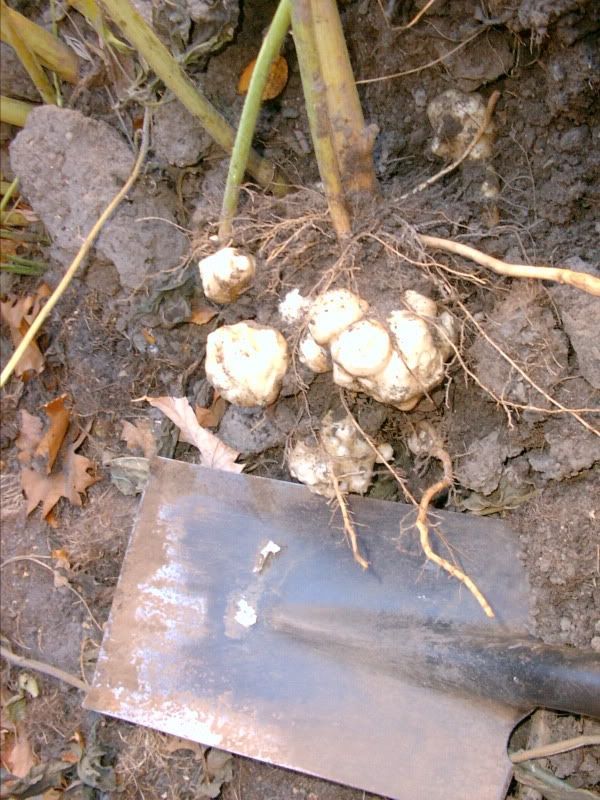
Jerusalum Artichoke tubers with a shovel for scale

I had so many that I was guilty of leaving bags of them on some of my neighbour's door knobs. Now, I know that some of these people have tasted JAs before, but for some they were mighty puzzled until I gave them a phone call to explain.

For those of you that don't know, in the summer, this relative of the sunflower produces Jack-in-the-Beanstalk sized stems topped with tiny weeny yellow flowers at the very end of the season. Their energy expenditure (besides going into producing these massive stalks) goes into producing knobbly, crispy, white, and tasty tubers.

Photo Sharing and Video Hosting at Photobucket
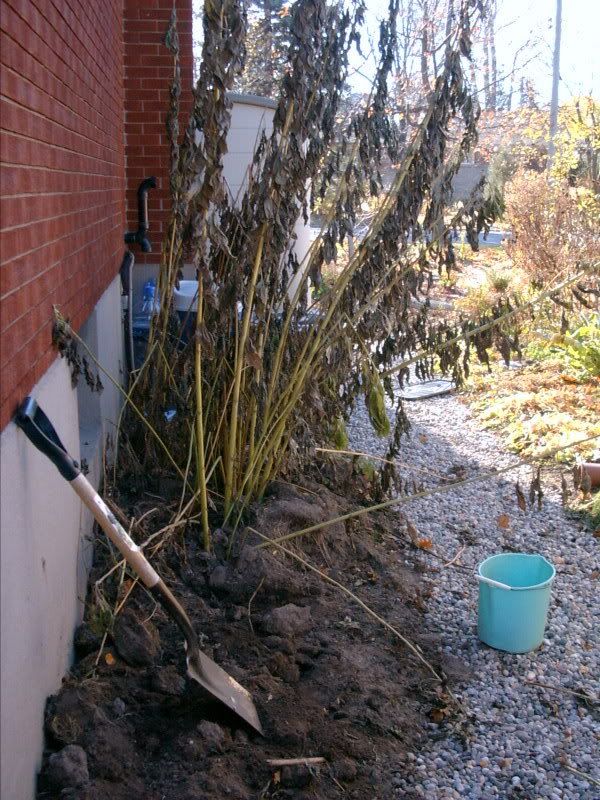
Jerusalum Artichoke blackened by frost.

The first time I tasted them, I 'liked' them but was a bit surprised as I had not had anything quite like them and I will not try to describe them to you either. They can be used in much the same way as potatoes, but unlike this starchy tuber, the crisp JA can aslo be used raw in salads or for dipping.

But the best thing about this plant is that it is hard to kill, easy to grow, relatively pest free, nutritious and perennial. Oh and it contains a starch called inulin is save for diabetics (though some say it causes wind). Why doesn't anyone grow it?

Did I mention that it was hard to kill? Any tuber left in the ground will sprout and it is hard to get all of them. Some people curse this plant if they discover it left to romp unattended by previous owners especially as it is a descent screen but not a particularly decorative plant:

Photo Sharing and Video Hosting at Photobucket
Jerusalum Artichoke - aka the Jack in the Beanstalk plant (credit to my neighbour for the nickname. She says she stares at it while washing dishes)

It does not store as well as other tubers, but can be kept a while (a month, two, accounts vary) in a moist, cool environment. I usually roast and puree mine then freeze to add to stews etc... Besides, depending on the year, it is diggable from September to November and then again from March to May so those are just JA seasons.

A pest for every plant

Okay, so it really is a great plant. Only I was a bit dissapointed to note that I had some root maggots. I would have looked for them but I hadn't expected to see them in this noted pest free plant. At any rate, they are easy to remove. Let's hope they are not too much of a pest next year.

Plant it and they will come...


Links

JA growing page
Mapple Farms - Canadian Distributor

Monday, November 5, 2007

Garden gold, red, orange, brown...

Leaf Mulch

I decided this year that I would make leaf mulch. Normally, I put all my leaves in a pile to make leaf mould which is a great soil conditioner, and a nice mulch. However, it takes at least one year, if not more to make leaf mould.

Photo Sharing and Video Hosting at Photobucket
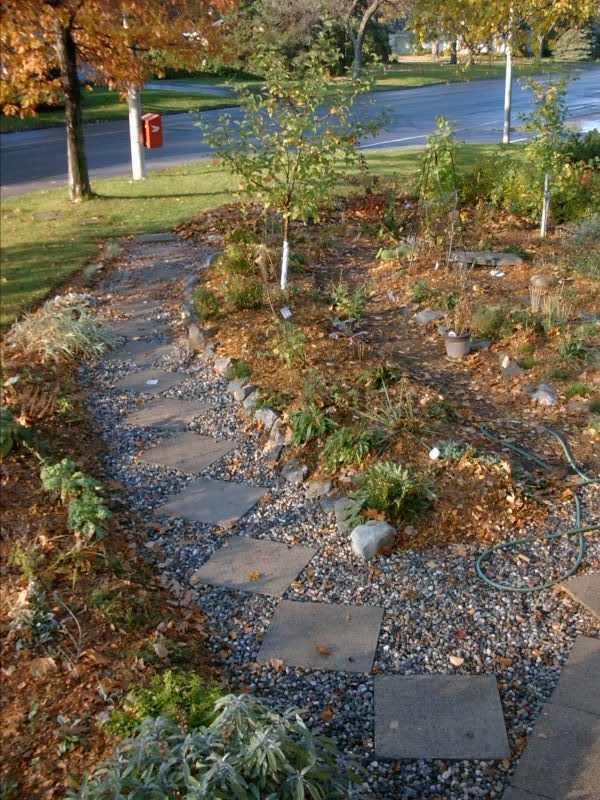
Front spiral garden

It is a very nice organic method, little energy use (mostly just yours as you rack them into the recepticle or pile), little waste. As most of us are plagued by the LAWN, we feel the need to remove most of the leaf litter to maintain the falsehood of a mowed meadow instead of a forest clearing. Psst - you can mulch leaves onto the lawn but I don't know to what quantity. I use this fact as an excuse for not removing every last leaf. Anyhoo -

There is another way of using your leaves as mulch - the impatient way.


Instructive Instructions

Step 1: Use lawn mower to bag up the last cutting of grass and leaves.
Step 2: Dump bagged or racked leaves onto your driveway
Step 3: Run over leaves with a lawnmower until they shredded into small pieces
Step 4: Apply a thin layer to perennial beds as mulch
Step 5: Use as insulation around tender plants
Step 6: Smile at the odd looks of neighbours.


A Conversation with Neighbours

I didn't have enough leaves for all my gardens so I got some off my neighbours. They were bemused? confused?

Me: Hey there. Saw you raking like fiends yesterday.

Innocent Neighbour: We thought of tossing them over the bushes into the neighbour's yards but figured it would be better to bag them.

Me: Funny you should say that because I could use some leaves.

Innocent Neighbour: Really?

Me: Yeah, I'm making leaf mulch. (very important that you explain that aren't just leaving whole leaves on the beds to blow back into their yards). I am grinding them very small so they won't blow around as much.

Innocent Neighbour: Well we have a lot of leaves.

Me: Great.

Innocent Neighbour: I think there are 15 bags.

Me: I'm sure I could use it.

Innocent Neighbour: 15 bags.

Me: Super. When can I get them.

Innocent Neighbour: I'll open the garage

--Meanwhile, Innocent Neighbour's wife, whom we will call Unbelieving Neighbour came out. --

Unbelieving Neighbour: No, she doesn't.

Innocent Neighbour: I'm not kidding.

Me: No, really I want the leavs.

Unbelieving Neighbour: There are 15 bags!

Me: That should just be enough.

And now my beds are mulched.


Links

Info on leaf mulch
Oak versus maple leaves and dandelion populations?
Making partly decomposed leaf mulch
More on leaf mulch - whole or shredded
Urban Leaf uses


Thursday, November 1, 2007

A frosty end
solanums versus brassicas

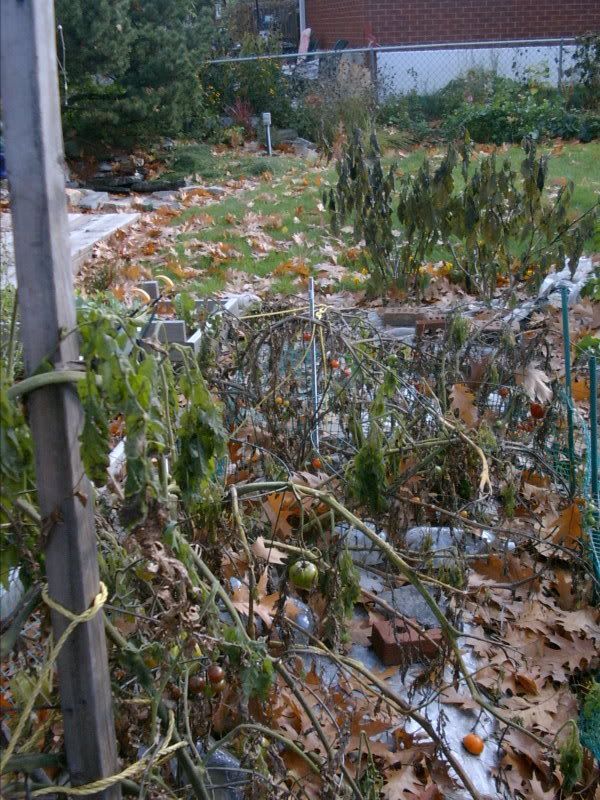
It looked like we might have had a November tomato, but 2 days before, frost hit.

Photo Sharing and Video Hosting at Photobucket
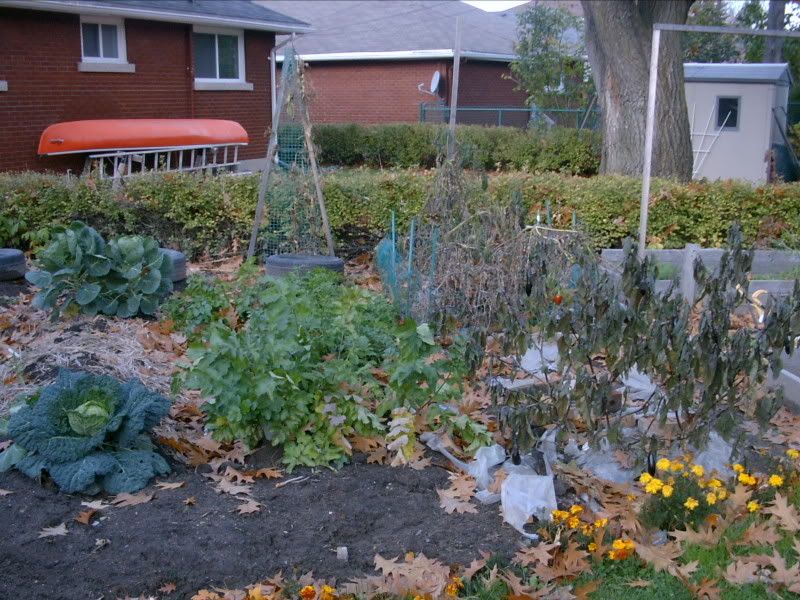
Black cherry tomatoes, various other tomatoes, and in the distance, eggplant all frost bitten

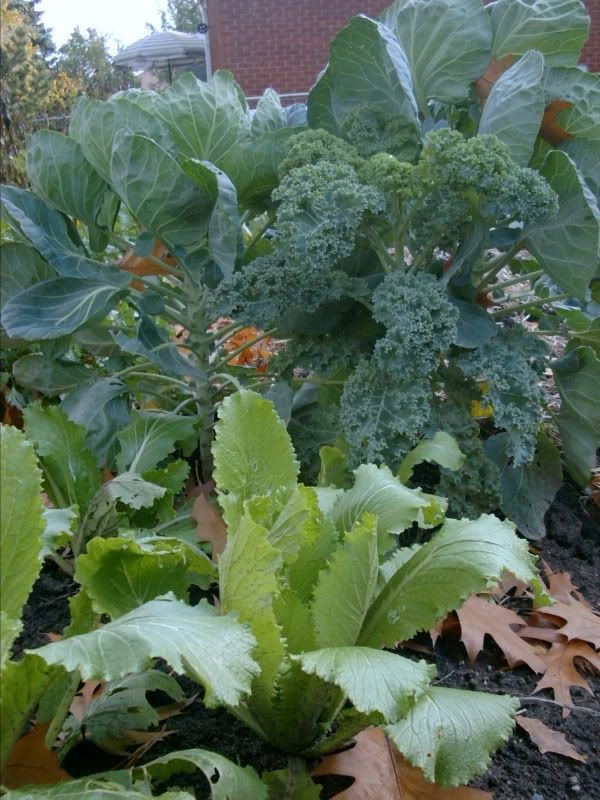
Sad, yes, but not to despair, I still have my cabbage, brussel sprouts, kale, chinese cabbage, tatsoi, broccoli, rabe, as well as root crops and other greens.

Photo Sharing and Video Hosting at Photobucket
From foreground back: chinese cabbage, kale, and brussel sprouts


Caution Gardening 201
For the not quite novice, the forgetful, or the bored.

This is the tale of two vegetable families.

The solanums

These are warm weather lovers. They drink in the sun, and fear frost. With the exception of the potato, it is the fruit that we eat. They should be started between 6-8 weeks before the last frost date, eaten with gusto at the height of the season, and then bid farewell to at first frost in the fall.

For most neophyte table gardeners, tomatoes are at the top of the list of vegetables they grow. They are relatively easy and the taste fresh from a backyard garden is without comparison. I credit the growing requirements of the tomato as part of the reason that so few beginner gardeners are aware of the best practice for growing another group of veggies.


The brassicas:

Ah, delicious and very healthy brassicas, all are quite cold tolerant. Some are extremely hardy and will survive vicious winters in a cold frame, such as kale, tatsoi, and mustard greens. Others, require a bit more pampering but like purple sprouting broccoli, will happily overwinter in mild winter areas. Most, in fact, prefer cooler weather. Or, should I say, that to get the most out of the vegetable and prevent bolting, you need cool temperatures. For gardeners with a short growing season or little strong sun (because of fog or rain or both) or where it is rarely warm enough to grow a good beefstake tomato, these crops fill in the garden.

Photo Sharing and Video Hosting at Photobucket
Left to right, brassica, parnsips and parsley then dead solanums.

They can be put out when soil temperatures are still on the cool side. Under cloches, and coldframes, I started some fabulous savoy cabbage this year when we were still having light snowfalls. The quick growing brassicas, like short season cabbage, spring broccoli, and any of the leafy greens such as broccoli rabe and bok choy are great early season choices. If you don't have a coldframe, try pop bottle cloches.

Then mid-summer, start another crop of the quick growers to mature in the cool temperatures of fall. Many brassicas such as brussel sprouts and turnips, taste better after being bitten by a few frosts. Starches are converted to sugars to lower the freezing temperature of the vegetable so they are sweeter.

Even if you don't love these tasty treats (and how could you not LOVE BROCCOLI???), grow them just so that your garden doesn't look so sad after first frost.

Photo Sharing and Video Hosting at Photobucket
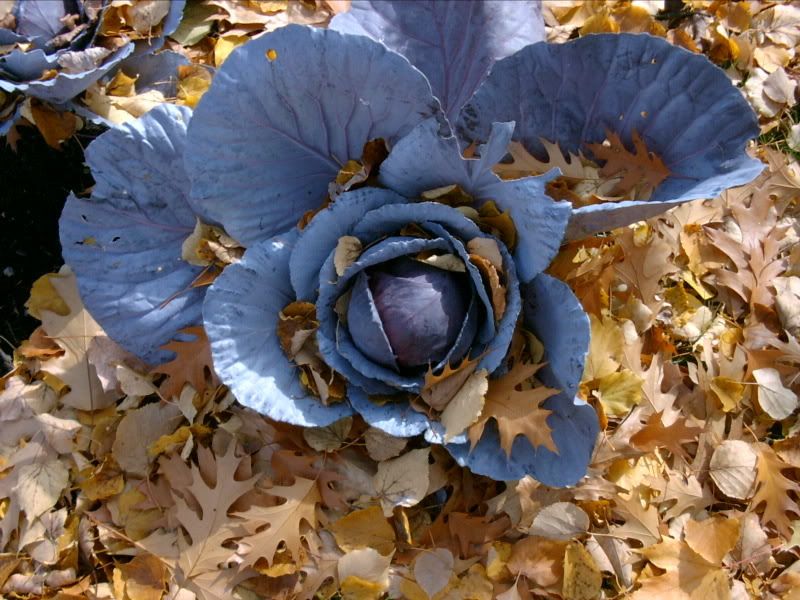
Long season purple cabbage beautiful contrasted with fall leaves, don't you think?

Links

Coleman's Four Season Harvest
Fall Crops - tips on planting
Fall Crops - an equation
Virginia Tech - brassica growing tips